


When President Trump announced from Mar-a-Lago that U.S. forces had captured Nicolás Maduro and would be “running” Venezuela for the foreseeable future, the imagery was unmistakable.
American troops. South American oil. Talk of rebuilding infrastructure, seizing assets, fixing a broken country “with billions.” It was the kind of speech that makes you instinctively check whether Netflix has rebooted Shock and Awe as a reality series.
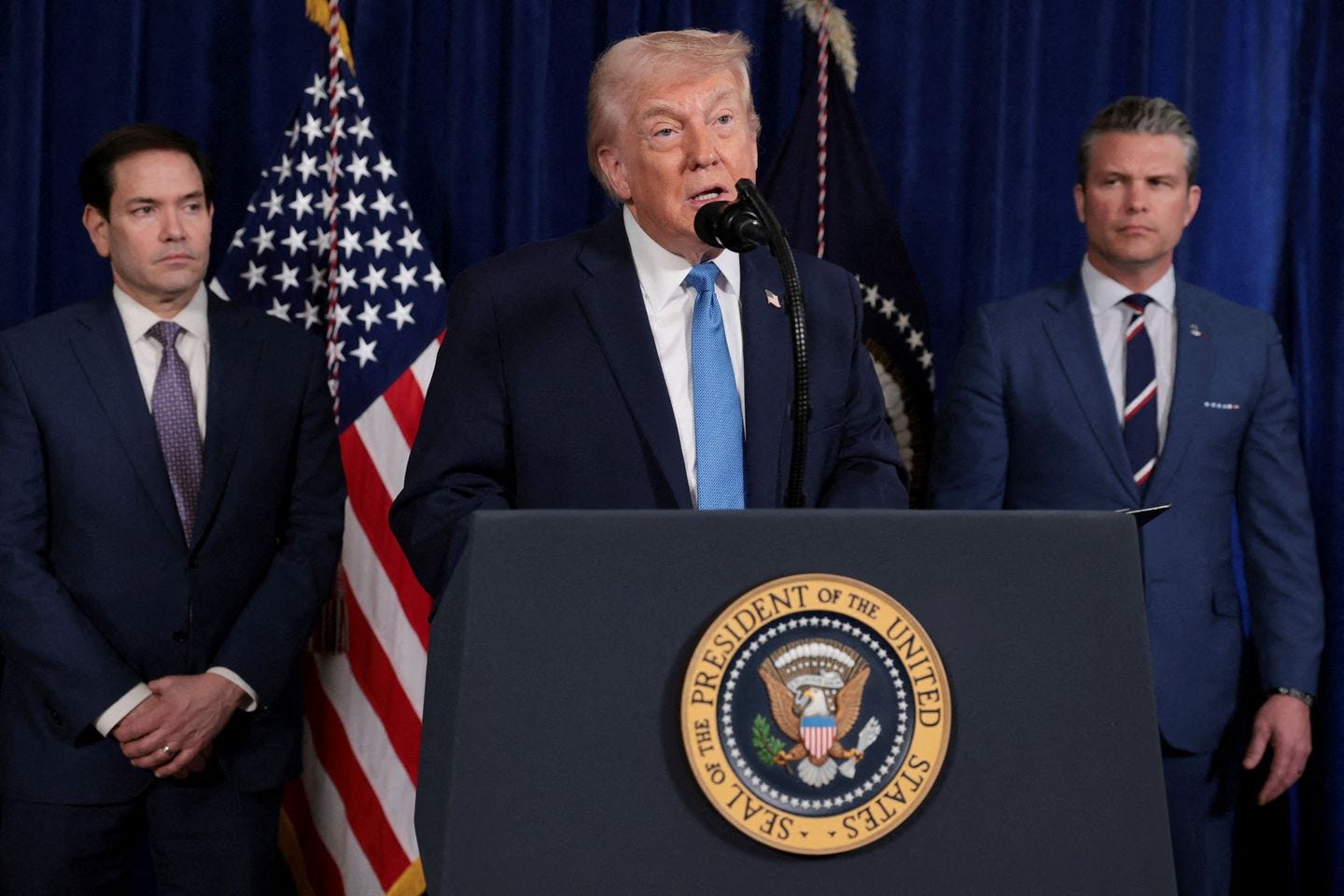
Trump promised that “very large United States oil companies” would spend “billions of dollars” restoring Venezuela’s “badly broken” oil infrastructure. He described the whole episode as “the greatest theft in the history of America” being put right — a phrase that suggests he has either never heard of the 2008 financial crisis, or has decided it was actually a craft fair.
The punchline arrived when markets opened.
Oil barely moved.
Brent crude twitched by less than a percent, which is the financial equivalent of glancing up from your phone, murmuring “wow,” and immediately returning to scrolling. Investors, it seems, heard “we’ve invaded an oil state” and responded with: “Cool. Still not buying your economics.”
Because this isn’t a war story. It’s an investment story. And the investment story is hideous.
The “Greatest Theft” Is That Anyone Thinks This Is Profitable
Yes, Venezuela has the largest proven oil reserves on the planet — roughly 300 billion barrels, a geological flex so absurd you can see why politicians start salivating. In the late 1990s it pumped over 3.5 million barrels a day. Today production has collapsed to under a million.
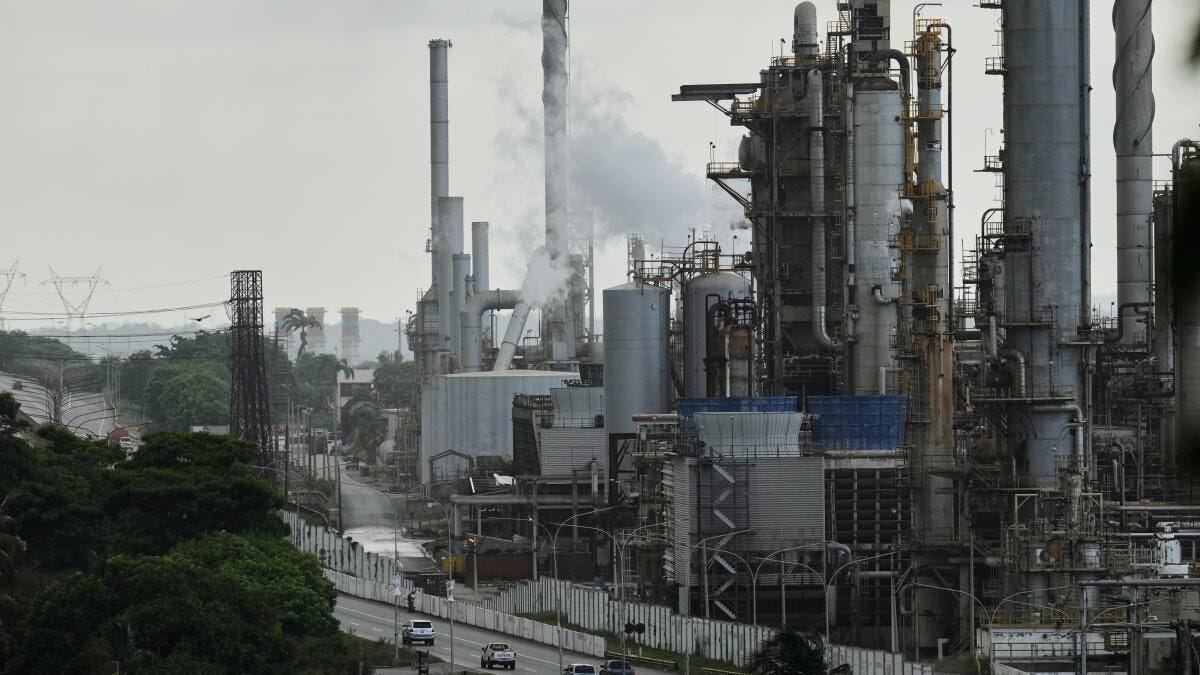
That decline wasn’t caused by a lack of oil. It was caused by Venezuela turning the oil business into a national sport called “How Quickly Can We Destroy Something Valuable.” Years of sanctions, mismanagement, corruption, and political chaos have left infrastructure decayed, refineries dysfunctional, and the state oil firm PDVSA operating like a museum exhibit titled “Late-Stage Extraction.”
Even PDVSA admits the place needs around $58 billion in upgrades to regain meaningful production. Industry estimates often run higher, more like $100 billion over a decade, because “rebuilding an oil sector” is not actually the same as “power-washing a driveway.”
And this is where Trump’s pitch hits the wall. Because the global oil market right now is not a thirsty desert begging for Venezuelan barrels. It’s a bath that’s already overflowing.
Analysts and agencies project continued surplus through 2026. Prices hover around the $60-ish range. Venezuelan projects often need something closer to $80 to make sense, especially given the heavy, sulphurous crude and the logistical nightmare of getting it reliably to market.
Which brings us to the key point the market immediately understood:
Trump didn’t announce an oil bonanza. He announced the world’s most cursed refurbishment project. As if redoing the White House East Wing is not enough.
Big Oil Meets Trump. Big Oil Brings a Spreadsheet and a Dictionary
So, naturally, Trump called in the cavalry: the CEOs of America’s biggest oil companies. This was meant to be the scene where corporate titans lean forward and say, “Mr President, we’re ready to drill for freedom.”
Instead, ExxonMobil CEO Darren Woods reportedly offered what diplomats might call a frank assessment and what everyone else would call a reality check to the forehead.
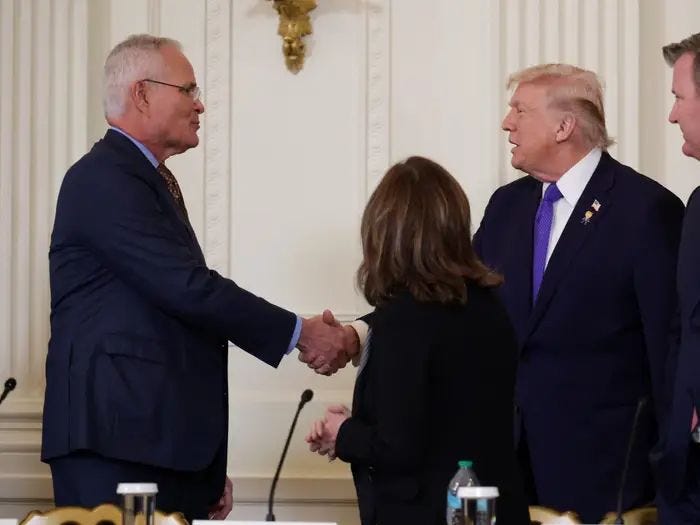
“If we look at the legal and commercial constructs and frameworks in place today in Venezuela,” Woods said, “today it’s uninvestable.”
Uninvestable. A word that should be printed on a commemorative coin and dropped into the Potomac.
Woods then explained why: inadequate legal protections, unstable commercial frameworks, no durable investment safeguards, and the need for wholesale changes to hydrocarbon law — i.e., the kind of boring, adult details that make corporate boards insist on not being expropriated, arrested, or trapped in a geopolitical hostage situation.
He even offered to send a technical team to assess the situation, which is corporate for: “We’ll have a look, write a report, and then politely vanish.”
Trump, naturally, reacted like a man being told his dream yacht is “structurally incompatible with water.”
“I didn’t like Exxon’s response,” he told reporters days later. “They’re playing too cute. I’d probably be inclined to keep Exxon out.”
Pause to appreciate the surreal elegance of this threat.
The president of the United States is threatening to exclude Exxon from a business opportunity… Exxon has just explained it does not want. That’s not leverage. That’s you shouting “YOU CAN’T QUIT, YOU’RE FIRED” at someone already halfway down the stairs.
Don’t Panic: The Wildcatters Are Coming
Treasury Secretary Scott Bessent, tasked with making the numbers work, effectively confirmed what everyone could see: the majors, the ones with boards and shareholders and lawyers who sweat through their suits, are not interested.
But, great news, the administration’s phones were “ringing off the hook” with calls from “independent oil companies and individuals, wildcatters” eager to get to Venezuela “yesterday.”
Nothing says “sound national strategy” like: “Don’t worry, the wildcatters are keen.”
These are the people whose due diligence is “vibes,” whose risk management plan is “luck,” and whose corporate governance consists of a single man called Rick who owns a helicopter.
Sure, sometimes wildcatters strike it rich. Sometimes they also drill a hole, hit nothing, and blame the deep state. The question isn’t whether wildcatters want Venezuela. The question is whether they can cough up tens of billions, tolerate political risk, and operate inside a legal system famous for changing rules mid-sentence.
The Best Oil Deal in the Region Is Next Door
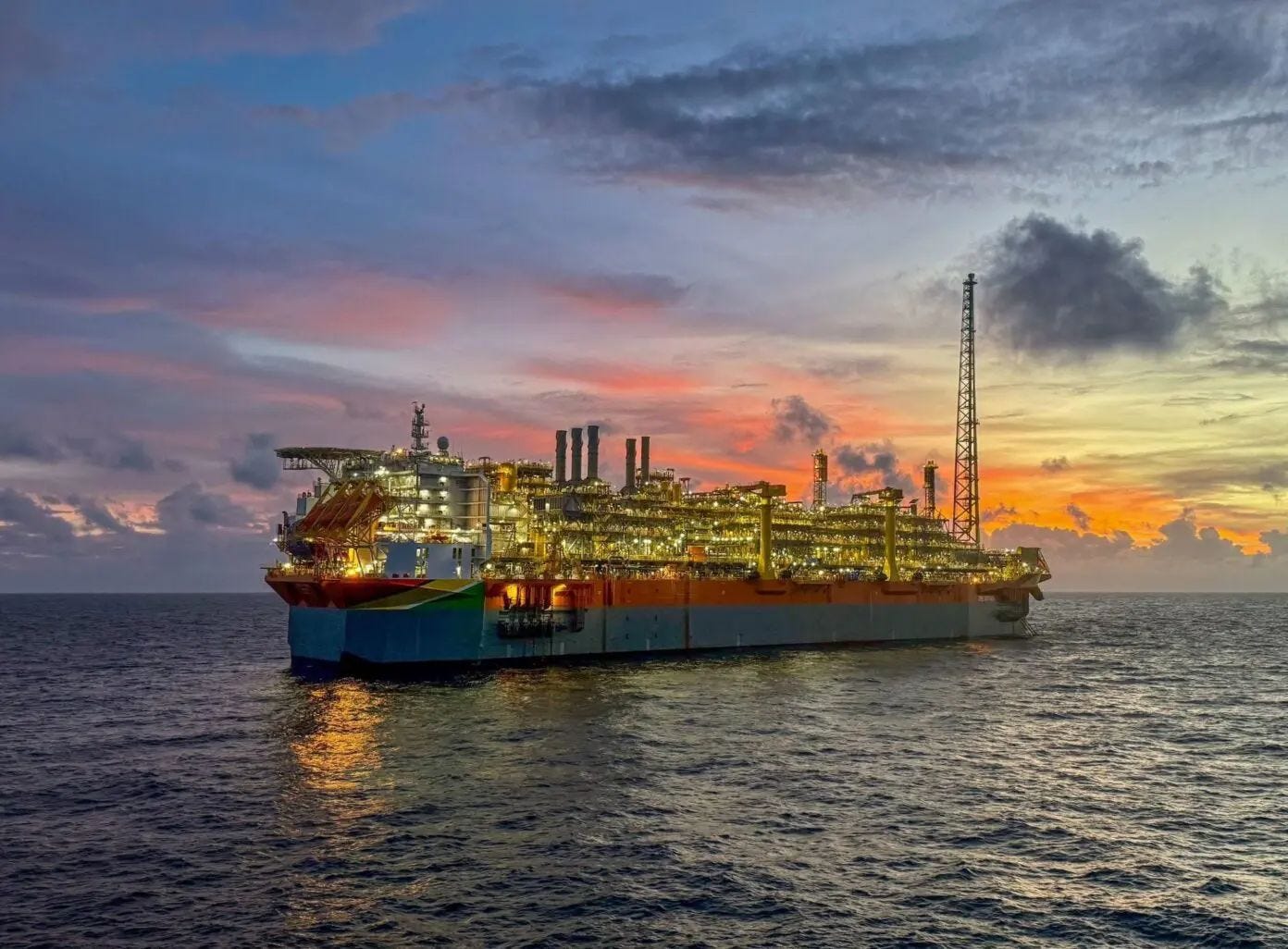
Now for the delicious irony: Venezuela’s neighbour Guyana is sitting on one of the world’s most attractive oil opportunities — over 10 billion barrels of high-quality crude discovered since 2015, much of it tied to Exxon-led development.
Compared with Venezuela, Guyana offers lighter oil, better economics, fewer political booby traps, and none of the historical baggage of being nationalised, expropriated, or treated as a piñata by whichever faction is currently holding the microphones.
So there’s a plausible, less cinematic explanation for the whole Venezuelan theatre: it isn’t about “getting Venezuelan oil flowing again.” It’s about reducing Caracas’s capacity to threaten the region — particularly Guyana’s oil-rich Essequibo area, which Venezuela has been increasingly aggressive about.
If the real objective is to neutralise that threat and secure an existing investment next door, the strategy starts to look less like “we’re taking the oil” and more like “we’re trying to stop someone else taking the oil.”
Which is still expensive, still messy, and still not the stuff of Brent spike, but at least it makes geopolitical sense in a grim, practical way.
Iraq, But With More Rust
Analysts keep invoking Iraq, because history loves a rerun. After the 2003 invasion, Iraqi oil production took years and years to revive meaningfully, and corruption and mismanagement remained endemic. The fantasy that oil revenues would smoothly fund the occupation was, as serious policy people politely put it, nonsense.
Industry veterans are even less delicate: there’s no urgency to rush back into Venezuela; the political risk overwhelms the upside; and if Venezuela did somehow ramp production, it would pressure prices and hurt other producers — which is another way of saying: even “success” comes with consequences no one wants.
In other words, the “we’ll fix it with oil money” pitch is not a plan. It’s a slogan with delusions of accounting.
The Underlying Enemy Isn’t Maduro. It’s Arithmetic.
The administration will sell the intervention as whatever narrative tests best: reclaiming stolen property, fighting drugs, restoring democracy, defending sovereignty, punishing enemies, liberating barrels — choose your adventure, and check back in an hour when the story updates.
But the economic logic is the same every time:
Big Oil has looked at Trump’s Venezuelan prize and politely declined.
Not “later.” Not “maybe.” Not “with a sweeter deal.” Just: uninvestable.
So what’s left? Independents. Individuals. Wildcatters. The brave men sprinting toward a burning building because they heard there might be copper piping. Or, a swift pivot to Iran?!
Maybe they’ll strike it rich in Venezuela. Wildcatters sometimes do. But the smart money, quite literally, is staying home.
Because the market has already watched this film.
And it knows the ending.
Not with a boom.
With a bill.
Keep up to date with The Letts Journal’s latest news stories and posts at our website and on twitter.