


In the annals of modern absurdity — somewhere between medieval prophecy and cable news — you’ll find the Trump administration’s occasional flirtation with bombing Iran. Not merely a geopolitical subplot, but a theological side quest. A moment when foreign policy briefly wandered into the Book of Revelation and decided it looked like a workable strategy document.
Call it Pentagon meets Pentecost.
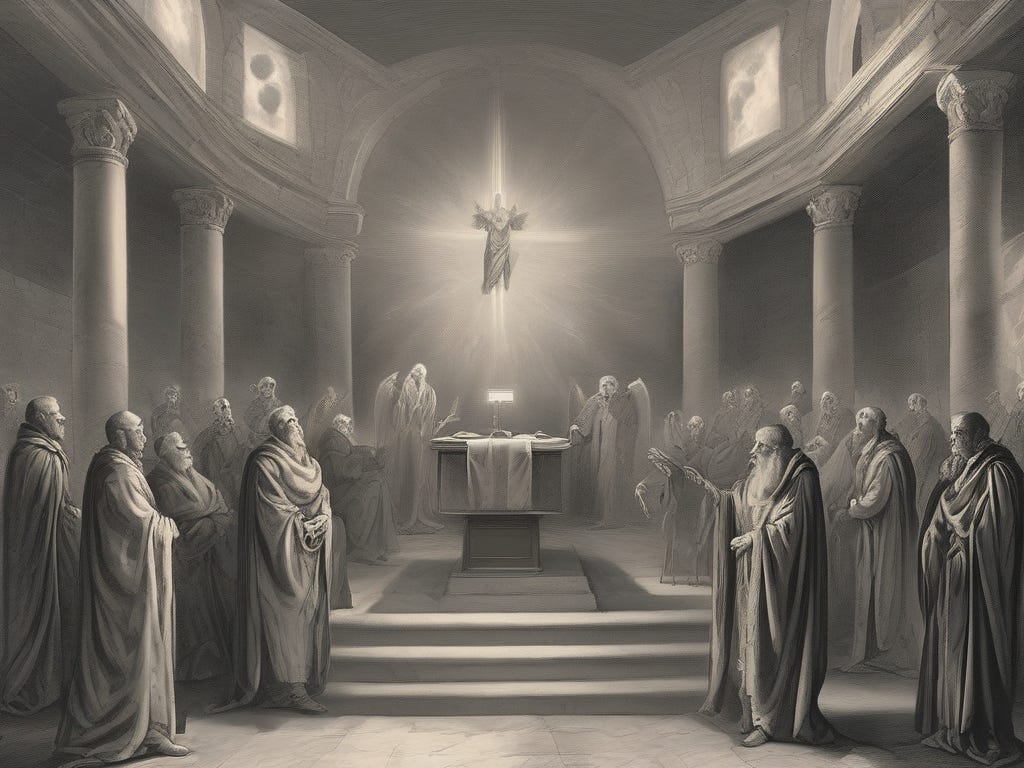
“When prophecy meets policy: A celestial strategy session.”
Leading this unlikely prayer circle were some familiar figures from America’s traveling revival of politics and prophecy.
There was Mike Huckabee, former governor, ordained Southern Baptist minister, and proof that in America the distance between the pulpit and the podium is roughly the length of a campaign bus. Huckabee has long had the comforting air of a man who might sell you sweet tea, salvation, and a pre-emptive airstrike in the same sentence.
Then came Pete Hegseth, Fox News personality, veteran, and enthusiastic champion of the idea that geopolitics might improve if everyone simply consulted the Old Testament before breakfast.
And orbiting the scene for years was Charlie Kirk, founder of Turning Point USA, who built an empire persuading college students that the free market, divine providence, and aggressive tweeting were all part of the same cosmic plan.
For this particular corner of American evangelical politics, Iran wasn’t merely a strategic nuisance. It was a biblical plot device. A waypoint on the road to the Rapture — that dramatic moment when believers expect to be whisked skyward while the rest of the planet deals with the logistical nightmare of the end times.
The theory—depending on which prophecy chart you bought at the church bookstore—was that events involving Israel could trigger the final act of divine history.
Which, in practical terms, meant that somewhere in Washington someone may well have wondered:
“So Mike… do you think the Rapture happens before lunch, or after the drone strike?”
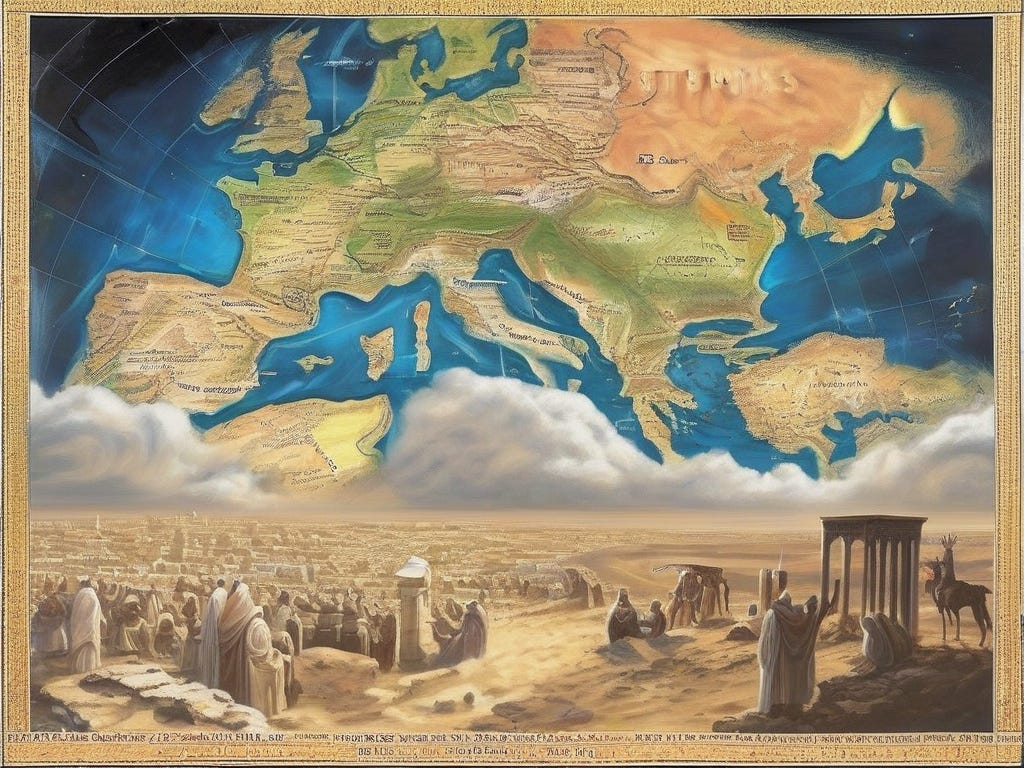
To be fair, most American foreign policy debates revolve around oil, security alliances, or electoral optics. But every so often a theological subplot sneaks in, armed with Revelation, a colour-coded timeline of Armageddon, and a surprisingly detailed opinion about missile ranges.
The result is a kind of apocalyptic realpolitik: the belief that a small, carefully managed war might not only stabilize the Middle East but also speed up Jesus’ return.
It’s a bold diplomatic doctrine. One might call it “shock, awe, and ascension.”
Meanwhile, across the Atlantic, things look rather different.
In Britain, the state religion may technically involve bishops in Parliament and a monarch who is Defender of the Faith, but the national approach to divine intervention is considerably less… proactive.
Under Charles III and the quiet institutional gravity of the British monarchy, foreign policy rarely includes phrases like “accelerating the apocalypse.” The British preference is diplomacy conducted at a pace that suggests the world might end eventually—but there’s no reason to rush it before tea.
Where American politics occasionally resembles a revival meeting with nuclear submarines, British statecraft tends to resemble a long cricket match: patient, mildly confusing, and punctuated by sandwiches.
“So… how do you feel about the Rapture?”
“Rather inconvenient, I should think. Terrible for the rail timetable.”
This contrast isn’t merely political. It’s cultural.
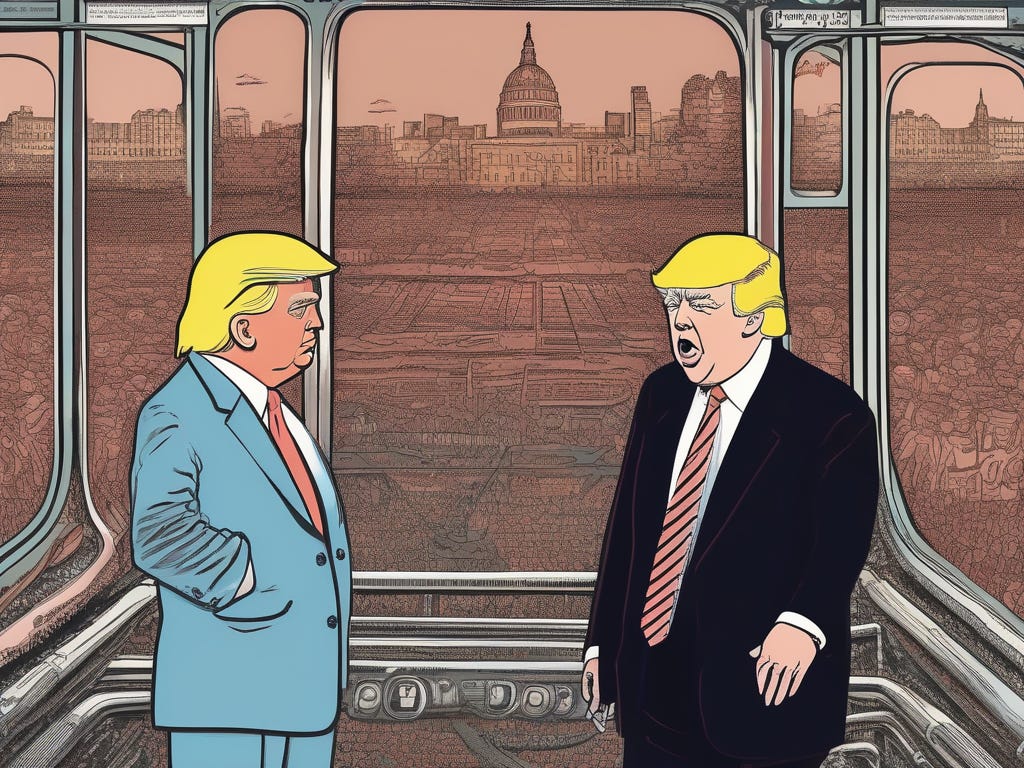
In parts of America, millions are raised on a steady diet of end-times prophecy, complete with best-selling novels, prophecy conferences, and maps of the Middle East that look suspiciously like stage directions for Armageddon.
In Britain, by comparison, the national eschatology mostly involves the slow collapse of the rail system and the possibility that someone important might one day abolish the BBC licence fee.
And so the Trump-era Iran gambit remains one of those uniquely modern episodes: a moment when ancient prophecy brushed up against drone warfare and thought, yes, this could work.
A reminder that in some corners of Washington, the road to heaven may run suspiciously close to a missile silo.
Meanwhile, Britain carries on with its own quieter miracle: maintaining a monarchy, a sense of irony, and the firm belief that if the world is going to end, it can at least wait until after the kettle boils. ☕️