


The Makerfield by-election was never supposed to be a by-election in the traditional sense. Nobody accidentally stumbled into this contest. There was no scandal involving invoices, tractors, interns or encrypted WhatsApp messages. The sitting Labour MP effectively detonated his own parliamentary career for one reason only: to clear a runway wide enough for Andy Burnham to land a leadership challenge against Keir Starmer.
Which is, objectively, an extraordinary thing to happen in British politics and yet somehow already feels entirely normal.
The entire contest has therefore acquired the atmosphere of an 18th century royal succession crisis, except instead of dukes on horseback there are Labour strategists in Allbirds discussing “narrative discipline” over flat whites.
Burnham’s allies insist this is not about replacing Starmer.
Which is true in the same way that Henry Bolingbroke’s return to England was technically just a property dispute.
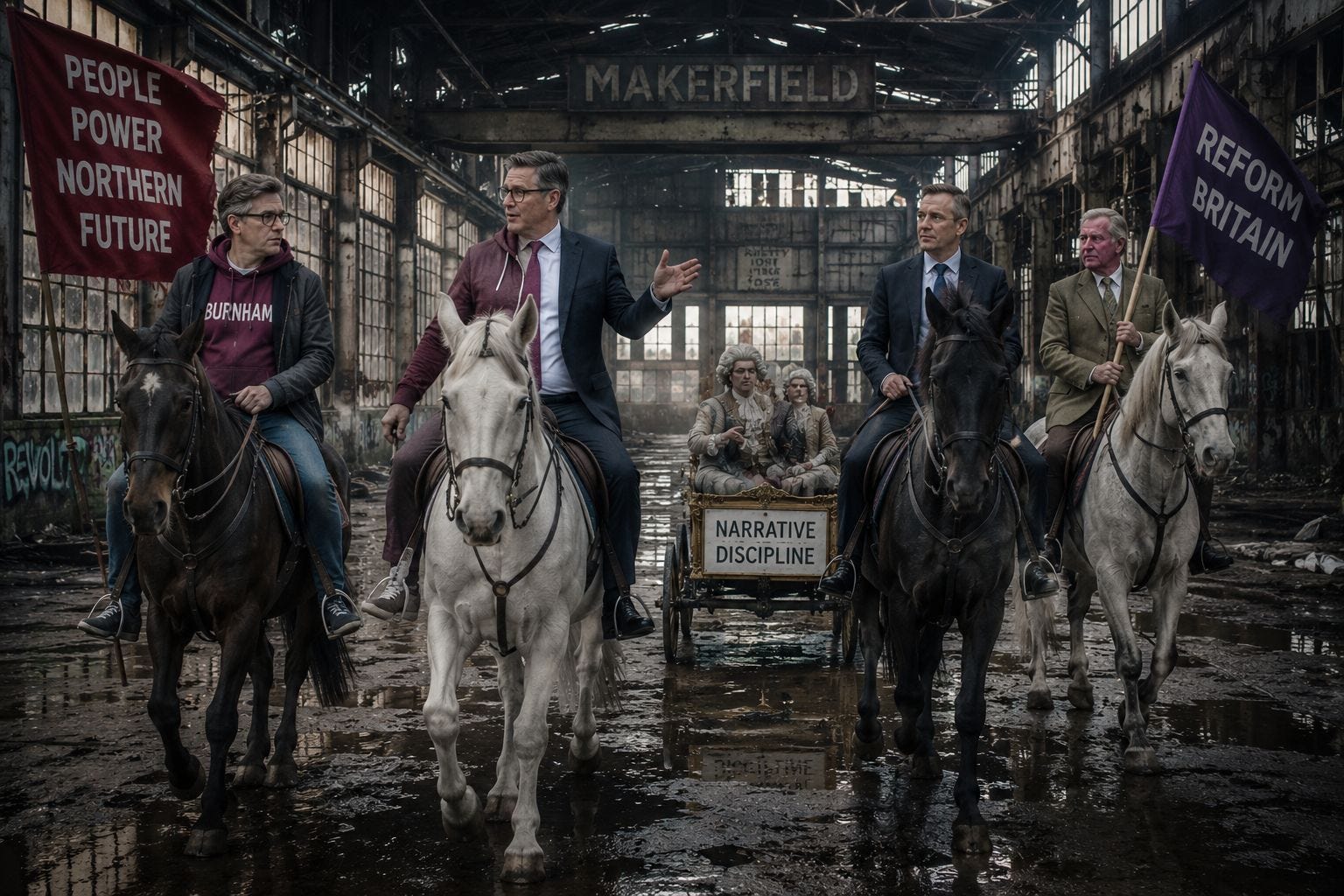
Nobody actually believes Burnham simply woke up one morning possessed by an overwhelming desire to represent Makerfield specifically. No human being has ever looked at a constituency boundary map and whispered, “At last. Purpose.”
This is about Westminster. It is about Labour’s future. It is about whether Starmerism — managerial, antiseptic, permanently terrified of emotional sincerity — can survive contact with Reform UK’s growing electoral insurgency.
And Makerfield is precisely the nightmare scenario Labour fears most.
Because this is not merely a traditional Labour seat. This is one of those old tribal strongholds where Labour once won elections by the sort of margins normally associated with Saddam Hussein referendums. Generations voted Labour because their parents voted Labour, because their grandparents voted Labour, because at some point in 1947 a man in a flat cap shouted at a coal lorry and the constituency spiritually committed itself forever.
Except now Reform is everywhere.
Not theoretically everywhere. Actually everywhere.
They won the local elections only weeks ago and now stalk the constituency with the swagger of men who have realised Britain contains an unlimited supply of furious homeowners and people commenting “ENOUGH IS ENOUGH” beneath newspaper articles about electric bicycles.
That is the real significance of Makerfield. It is not a by-election. It is a stress test for post-Conservative Britain.
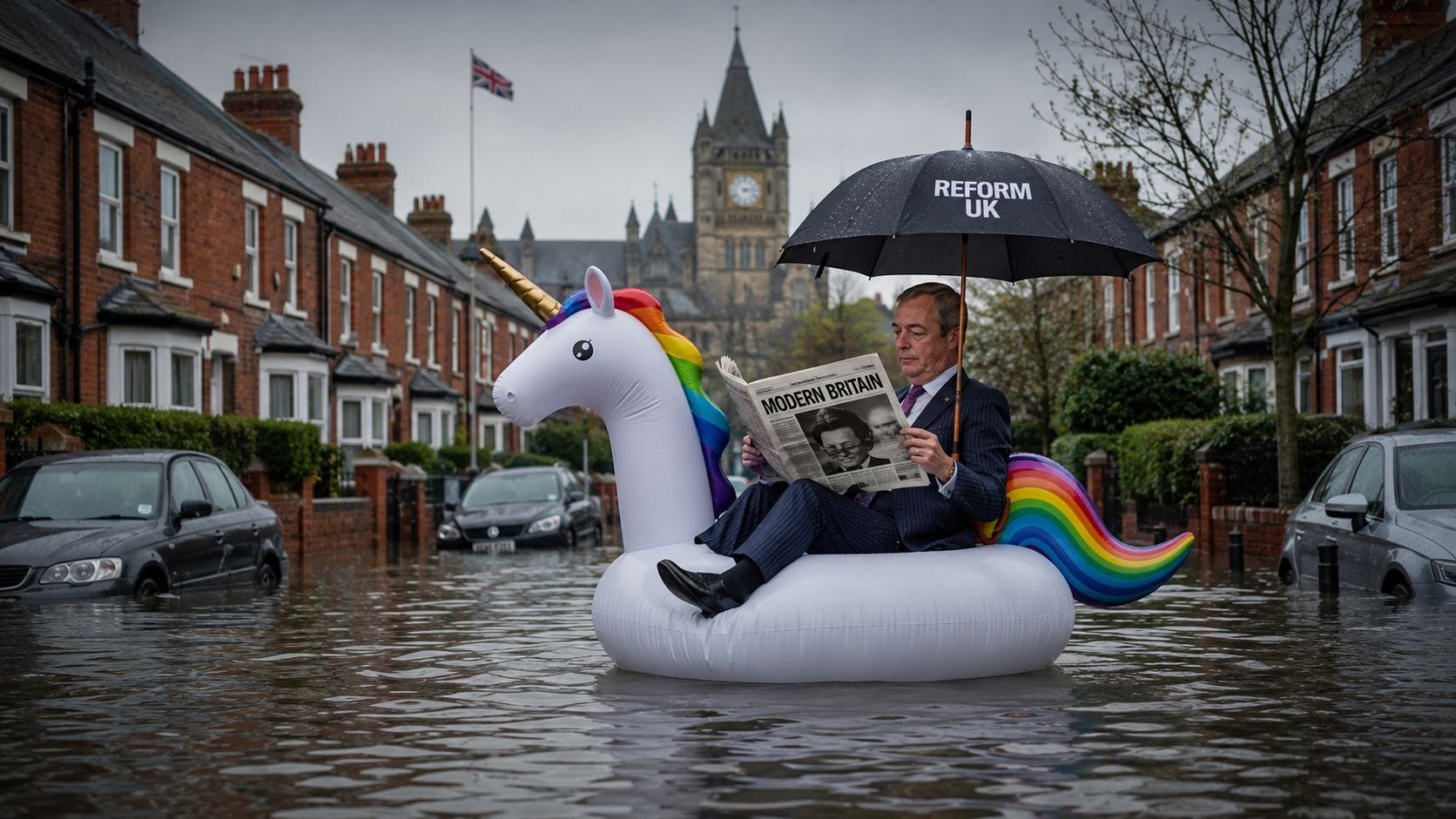
Labour increasingly resembles a party run by highly competent regional airport managers. Reform increasingly resembles a stag do that has achieved political consciousness. And the terrifying thing for Labour is that the stag do is winning.
Nigel Farage understands something Westminster still refuses to admit: voters would often rather hear an emotionally satisfying lie than a technically accurate LinkedIn post.
This leaves Labour in an impossible position. Starmer and Wes Streeting have spent years trying to construct a version of Labour that appears economically responsible, culturally non-threatening and emotionally sedated enough to reassure suburban accountants.
Then Reform arrives screaming about borders, decline, patriotism and national humiliation with the energy of a man trying to fight a seagull outside a chip shop.
And unfortunately for Labour, this currently sounds more alive.
Which is why Burnham matters.
Burnham is effectively Labour’s emergency backup leader stored behind glass for use during national crises. He speaks fluent Northern. He looks like he has opinions about municipal transport. He can discuss economic deprivation while standing in front of a tramline with the solemnity of a wartime statesman.
Most importantly, Burnham sounds like he has met an actual human being recently.
His entry into Makerfield is therefore less a candidacy and more a threat display aimed at Starmer’s operation. A warning from Labour’s soft-populist wing that the party cannot continue speaking exclusively in focus-grouped management consultancy dialect while Reform eats its old heartlands one grievance at a time.
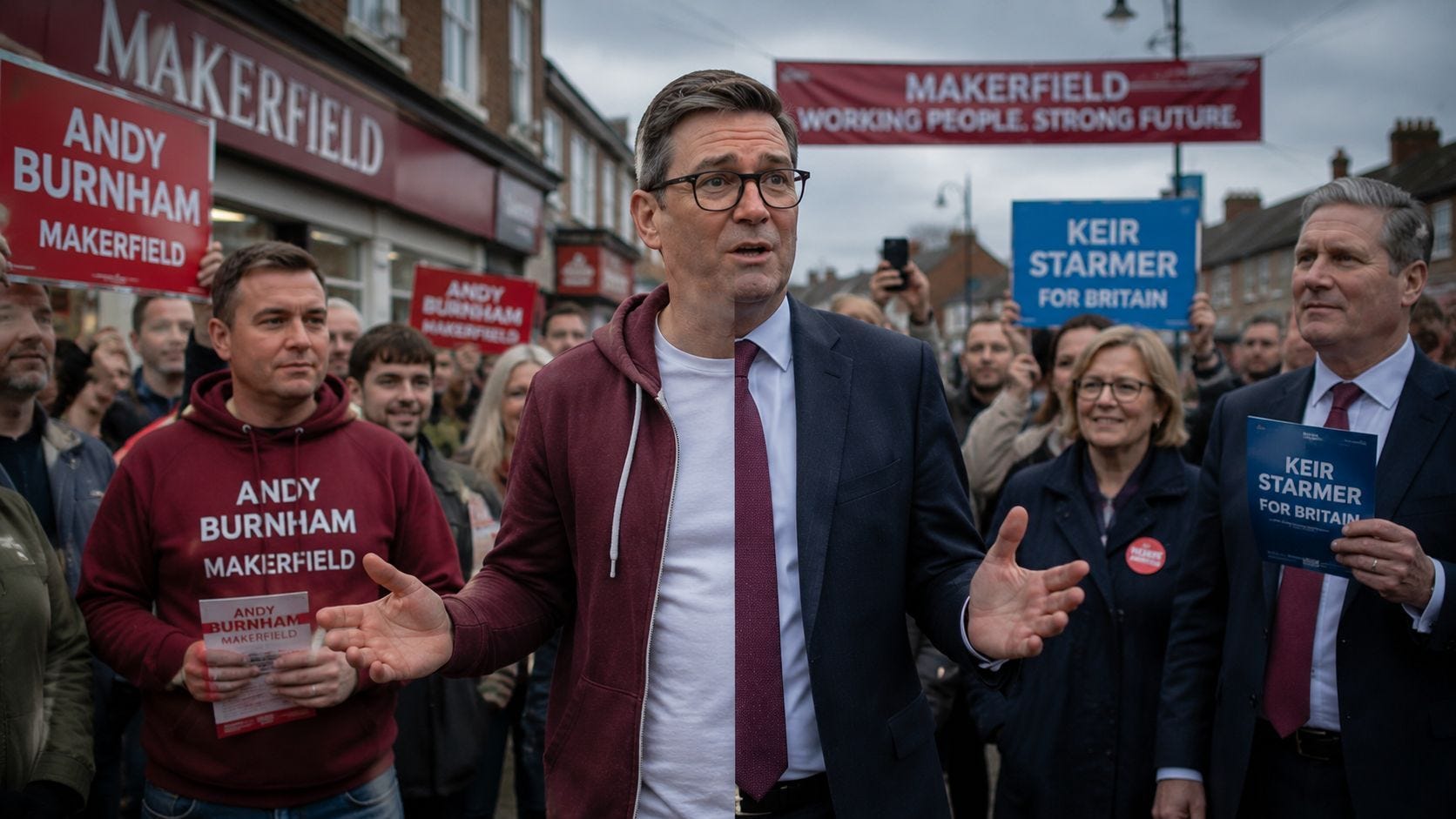
Even Wes Streeting now seems trapped in this dynamic — perpetually oscillating between ambitious moderniser and man trying not to get booed in a pub.
Streeting belongs to that generation of Labour politicians who desperately want to appear tough, pragmatic and unsentimental, but increasingly look like substitute teachers trying to control a classroom after someone has released a ferret.
Meanwhile Farage simply wanders through the chaos smiling like a man who accidentally became right about everything through sheer persistence.
The Greens briefly attempted to turn Makerfield into their own ideological psychodrama. Zack Polanski — youthful, hyper-online and vibrating with the energy of a man who believes history can still be altered through veganism and direct action — initially insisted the Greens would contest the seat.
Then Caroline Lucas intervened.
Lucas, now occupying the role of Wise Environmental Aunt of the Republic, gently suggested the Greens should stand aside and allow Burnham a clearer route back into Parliament.
The Green candidate withdrew shortly afterwards, in what may be the first recorded example of youthful revolutionary energy being defeated by a disappointed look.
But that is ultimately a side plot.
The real story is this: Labour can now see the thing approaching it in the dark.
Makerfield reveals the shape of the next election. Not Labour versus Conservative, but Labour versus Reform. Starmerism versus populism. Spreadsheet governance versus national resentment.
And somewhere inside Labour HQ they now understand the genuinely horrifying possibility that Nigel Farage may have a better intuitive grasp of modern Britain than the entire parliamentary Labour Party combined.
Which explains why they are trying to parachute Andy Burnham into Parliament like the final helicopter leaving Saigon.