


For everyone else, the year has been something of a mixed blessing.
Thanksgiving is traditionally a time to reflect on our good fortune. Admittedly, this year’s exercise requires rather more imagination than usual, although imagination is now available on a monthly subscription from several Silicon Valley companies that are losing extraordinary amounts of money providing it.
Nevertheless, in the spirit of the occasion, The LettsJournal has identified six things for which we should all be profoundly grateful. Readers are encouraged to share them around the dinner table, preferably before the relatives start discussing immigration.
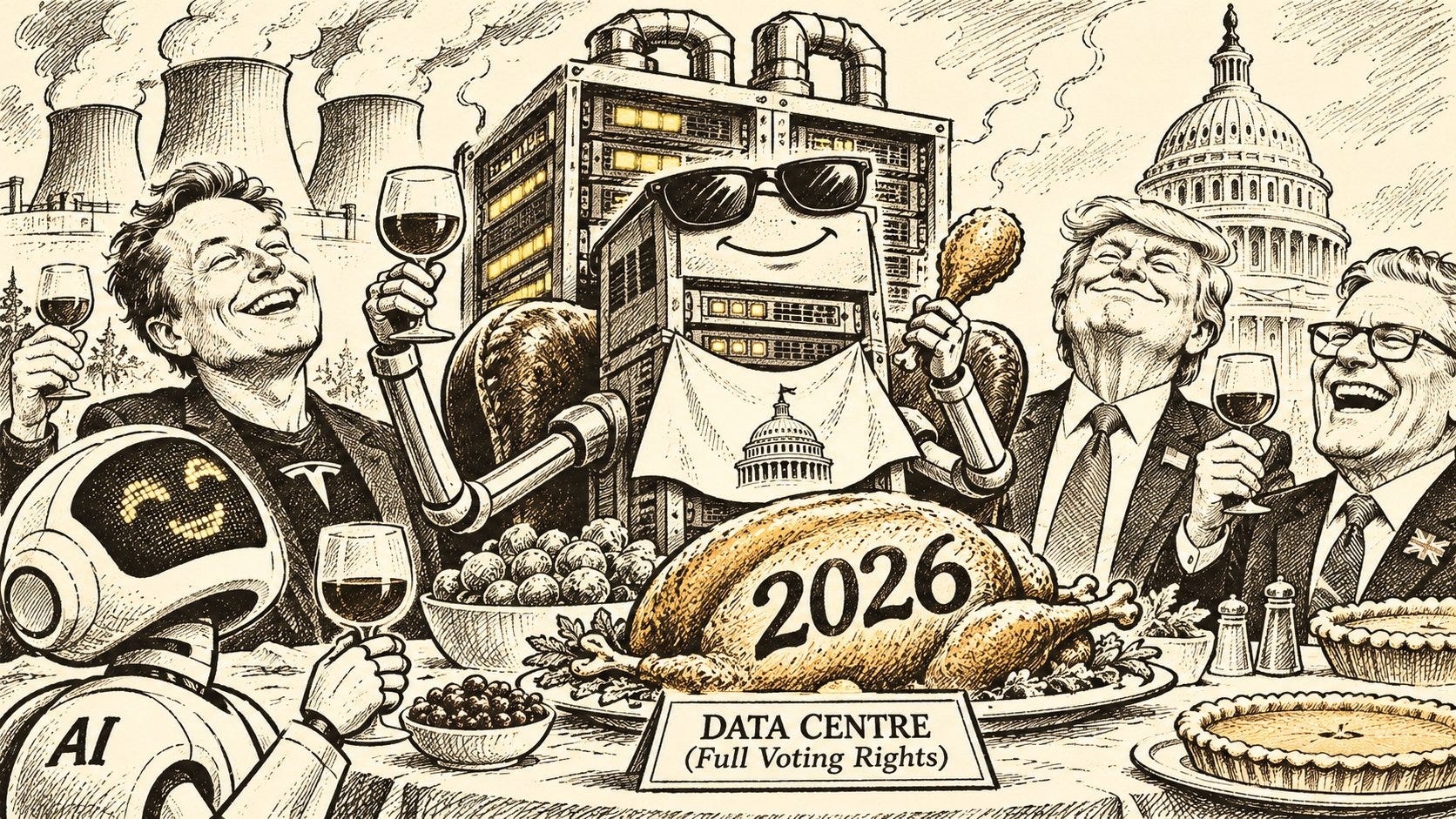
1. Artificial intelligence has given us more leisure time
For decades, technological progress promised to liberate humanity from the burden of work. In 2026, Silicon Valley finally began delivering on that promise, albeit without the inconvenience of continuing to pay people.
Technology companies have been dismissing employees while investing enormous sums in artificial intelligence. This is called a productivity revolution. The productivity belongs to the shareholders and the revolution belongs to the people standing outside the building holding cardboard boxes.
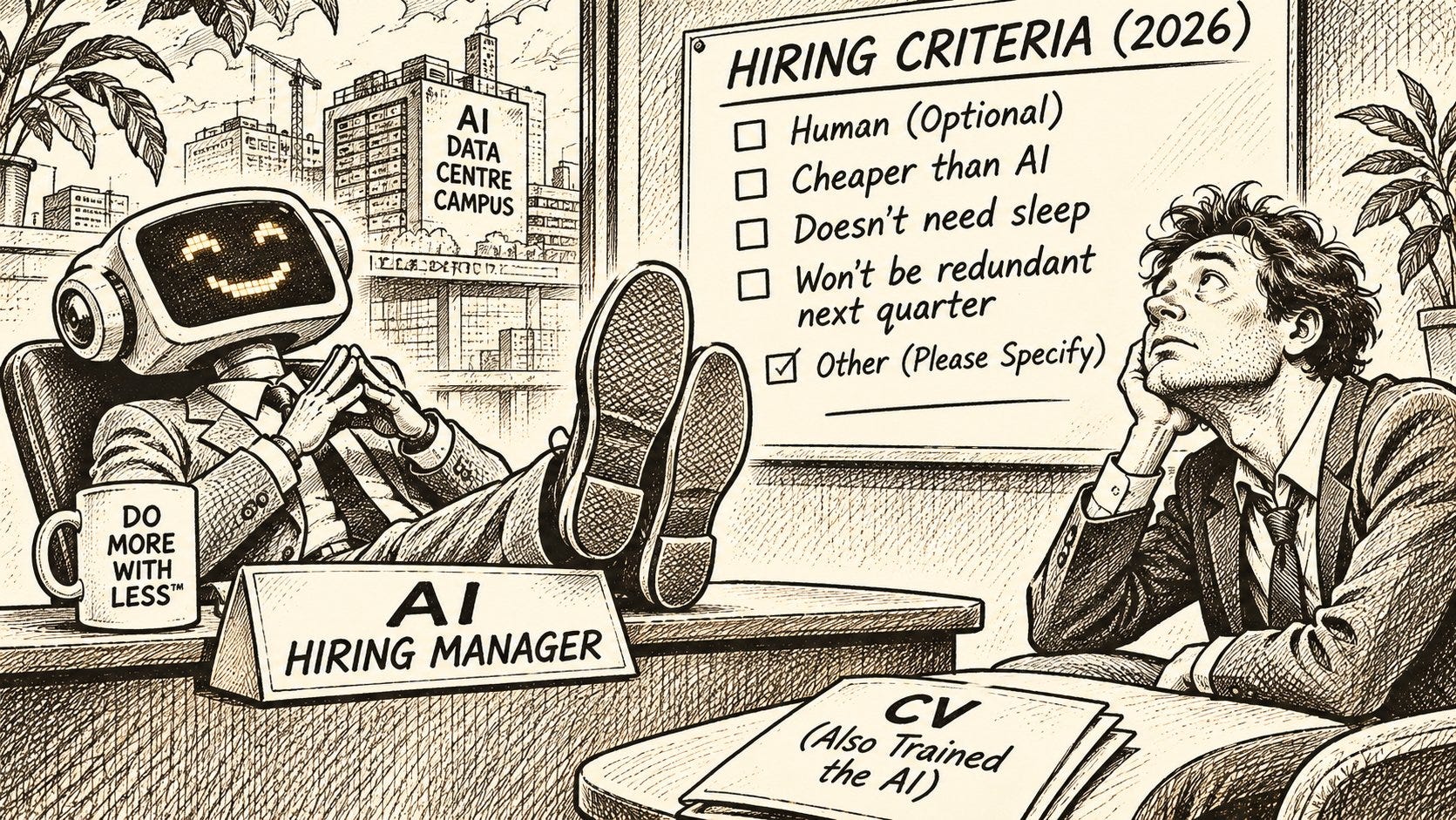
The particularly beautiful part is that many of the people now being made redundant spent the previous two years helping their employers figure out how to use AI. It is rather like being asked to dig a hole in the garden, only to discover that the landscaping project is your funeral.
Former employees can now use AI to write their CVs, compose their covering letters and prepare for interviews conducted by AI systems assessing applications for jobs that may shortly be eliminated by AI.
The circle of economic life is complete. The only unnecessary participant appears to be the human.
2. Americans have rediscovered democracy
November’s midterm elections delivered a resounding defeat to Donald Trump’s Republicans, with the Democrats winning control of both chambers of Congress.
Democrats are understandably delighted. They can now return to their traditional occupation of explaining why, despite having won an election, they cannot do the things they promised during it.
Republicans, meanwhile, have rediscovered the importance of congressional restraint, presidential authority and the danger of allowing an elected majority to get carried away with the idea that it has been elected.
Both parties spent vast sums convincing Americans that democracy was on the ballot. It turns out democracy was indeed on the ballot, although its campaign expenses suggest it belongs to a considerably higher income bracket than most Americans.
For the next two years, Washington can look forward to a period of bipartisan cooperation in which neither party cooperates and both blame the other for the absence of cooperation.
The American people should be thankful that their votes still count. The billionaires should be thankful that their cheques continue to count somewhat more frequently.
3. Britain has changed prime minister again
Britain’s principal contribution to political innovation in recent years has been the development of the disposable prime minister.
Keir Starmer arrived promising stability after the Conservatives had spent several years treating Downing Street as a timeshare. Britain now has Andy Burnham, who has inherited the familiar task of explaining that the country is in a much worse condition than anyone could reasonably have anticipated, including the people who have been governing it.
Changing prime minister has become Britain’s alternative to economic growth. It is considerably cheaper than building infrastructure, requires no planning permission and usually produces a measurable improvement in national optimism lasting somewhere between a fortnight and the first fiscal announcement.
Nigel Farage, meanwhile, continues to benefit from the peculiar political arrangement whereby nearly everything that goes wrong in Britain is evidence that he was right, including occasionally the consequences of things he previously advocated.
The Conservatives are rebuilding. Labour is resetting. Reform is surging. The Liberal Democrats are presumably doing something involving a large inflatable prop.
The country itself is still waiting for a train.
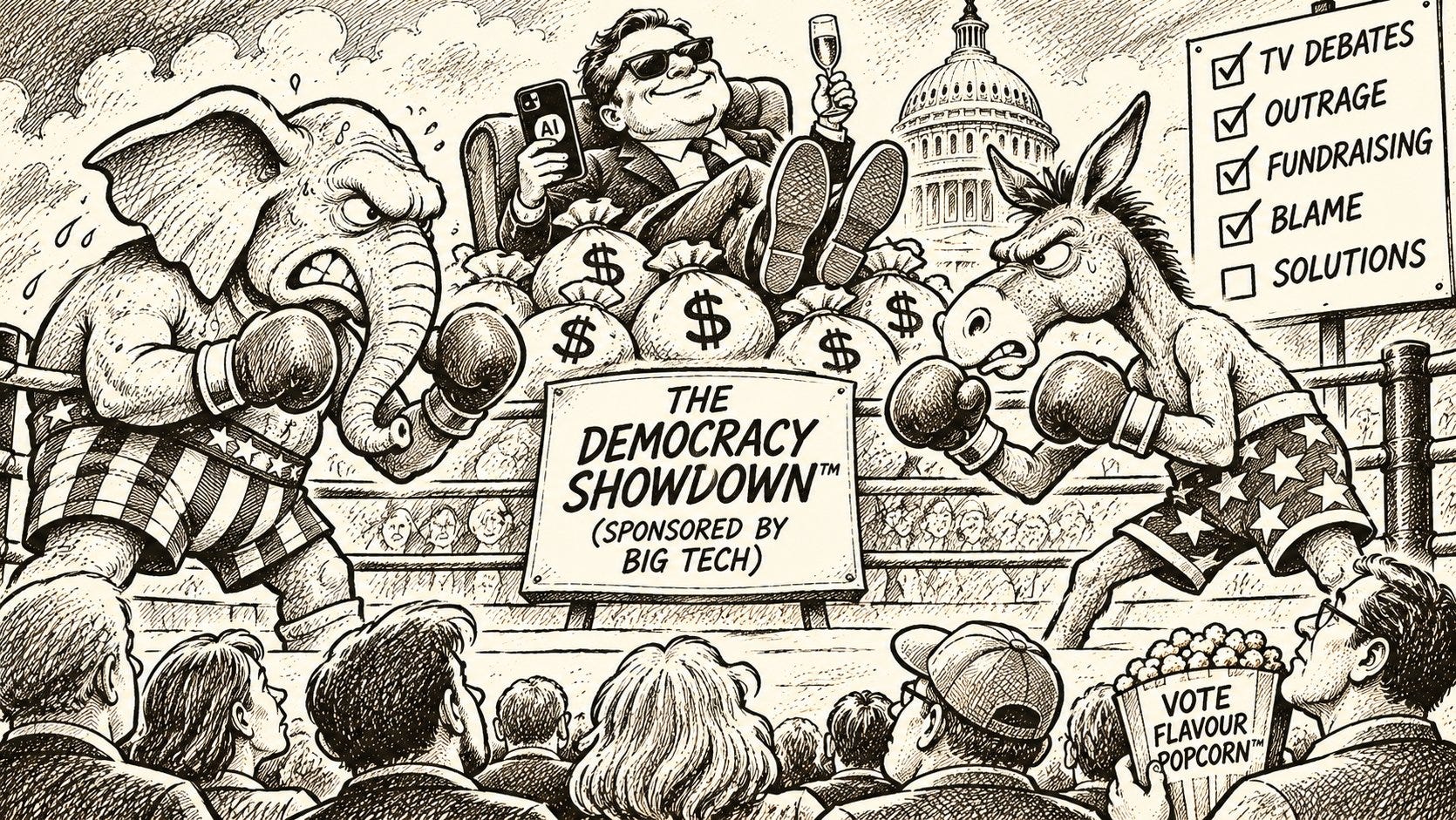
4. Billionaires are spending their money on something useful
For centuries, humanity’s wealthiest individuals squandered their fortunes on palaces, yachts and unnecessarily elaborate Christmas parties. Today’s billionaires have discovered a more socially useful purpose for their wealth: building enormous warehouses full of computers that can write unnecessarily elaborate invitations to Christmas parties.
America’s largest technology companies are pouring hundreds of billions of dollars into AI infrastructure. Entire power stations are being contemplated so that humanity can ask a machine to make an email sound slightly warmer.
The industry insists that artificial intelligence will eventually solve some of our most pressing environmental problems. In the meantime, it would appreciate access to considerably more electricity and water.
There is something wonderfully circular about companies developing artificial intelligence to solve problems increasingly created by the development of artificial intelligence.
Investors are now beginning to ask whether the revenues will justify the expenditure. This is considered a rather old-fashioned question in Silicon Valley, where the traditional relationship between revenue and expenditure has been replaced by the relationship between expenditure and the next fundraising round.
We should be grateful that someone is investing in the future. It would simply be reassuring to know whether we can afford to live in it.
5. The cost of living has brought us closer together
If there is one achievement that unites British and American political leadership, it is the ability to describe an improving economy to people who experience it as a deteriorating one.
Economists explain that inflation has fallen. Governments repeat the good news. Unfortunately, the supermarket has misunderstood the announcement and continues to charge rather a lot for cheese.
The difficulty is that ordinary people persist in measuring economic performance using entirely unscientific indicators, such as whether they can afford a house, heat it and occasionally put something inside the fridge.
Young people have responded to the housing crisis by abandoning the extravagant ambitions of previous generations. Home ownership has been replaced by subscriptions, shared accommodation and the opportunity to build a personal brand from a bedroom in their parents’ house.
Politicians regularly express concern about declining birth rates. Apparently, people who cannot afford a second bedroom are also proving reluctant to manufacture its occupants.
Thanksgiving dinner at least offers families an opportunity to sit together and discuss their financial anxieties in person. In many cases, they are already living together, which considerably reduces the travel expenses.
6. At last, nobody needs to have an original thought
Artificial intelligence can now write your emails, produce your presentations, summarise the books you haven’t read and generate thoughtful responses to opinions you haven’t formed.
LinkedIn has become a particularly magnificent demonstration of this achievement. Machines produce inspirational observations about leadership, which other machines respond to with thoughtful observations about leadership, while the humans involved congratulate themselves on building authentic professional relationships.
The political applications are equally promising. An AI can generate a speech that sounds compassionate without committing to anything, authoritative without knowing anything and optimistic without promising anything measurable. Westminster has understandably been slow to acknowledge the breakthrough, having perfected the technology without computers several decades ago.
The rest of us can look forward to a world in which the production of information becomes almost limitless, while the production of anything worth reading becomes an increasingly specialised activity.
Perhaps independent thought will eventually become a premium feature.
A final word of thanks
Despite everything, there is one thing for which we can be genuinely thankful. Human beings remain stubbornly unpredictable. They occasionally vote against the people who have spent the most money persuading them, laugh at politicians who take themselves too seriously and ask inconvenient questions of billionaires who have confused their bank balances with their intellectual abilities.
In an age when everyone from Silicon Valley to Washington and Westminster wants to tell us what to think, the ability to recognise bullshit remains one of humanity’s most valuable natural resources.
Fortunately, the supply of raw material has never been greater.
Happy Thanksgiving.