


I have developed a strong view about someone’s suitability to remain in a televised dance competition. My research consists of two rehearsal clips, an amusing exchange with their dance partner and a video in which they were very kind to their mother. I have not seen the actual dance. Nevertheless, I am ready to vote. And I feel this is a perfectly reasonable way to enjoy Strictly Come Dancing. It becomes a more interesting proposition when applied to electing a government.
Strictly and its American counterpart, Dancing with the Stars, offer a surprisingly useful way to understand how we encounter public figures. There is the performance itself, and then everything through which we interpret it: rehearsals, interviews, backstage exchanges, personal posts and other people explaining what we ought to think. The dance still matters, but by the time it happens, we may already have chosen our side.

Previously, on the programme you haven’t watched
There was never an innocent age when everyone watched the same programme, reached an independent conclusion and discussed it calmly over a modest biscuit. Television had editors, newspapers had favourites and families had someone who talked through the judging. Strictly has long understood the value of the surrounding story. It Takes Two gives viewers interviews, rehearsals and the opportunity to become unusually knowledgeable about someone else’s hamstrings.
Social media expands both the ways into that story and the number of people telling it. You might follow a professional dancer, encounter a contestant’s personal account or stumble across a partnership through an enthusiastic stranger’s compilation video. By Saturday, one viewer has absorbed a week of perseverance and progress. Another has seen an awkward exchange and three separate explanations of why the partnership is doomed. They watch the same ninety-second routine carrying quite different expectations.
Politics offers a less sparkly version of this experience. A speech or interview becomes a collection of clips, each finding its own audience. One person encounters a thoughtful explanation; another sees a hesitation; a third receives the same hesitation with ominous music underneath it. All three may reasonably believe they have seen what happened.
Authentic footage, incomplete picture
None of this requires fabrication. Someone may genuinely have rolled their eyes, but what is often missing is the context immediately before it, or a brief flash of irritation is presented as a definitive verdict on character. I remain alert to this risk, unless the clip confirms what I already believe, in which case I treat it as compelling evidence and share it widely.
In a dance competition, enthusiastic overinterpretation is a relatively harmless pleasure. Deciding that a contestant looks “a bit full of themselves” is practically a domestic voting category, even if it rarely appears on the judges’ paddles. In politics, the consequences are rather greater. One strong answer becomes proof of expertise; one clumsy sentence, evidence of permanent incompetence; one agreeable personal moment, a recommendation for high office.
Short clips can also do genuine work. They can surface something a lengthy broadcast overlooked, or make a complex explanation accessible to people who would never sit through the full interview. The question is always what survives the selection. Thirty seconds can tell us something useful, as long as we resist asking it to tell us everything.
I feel I know them. This may be a problem.
Rehearsal footage gives us a reason to care about the person behind the dance. We see the effort, the frustration and the occasional negotiation with feet that appear to have received instructions from an entirely separate department. Understanding what someone has struggled with makes their eventual improvement more satisfying to watch.
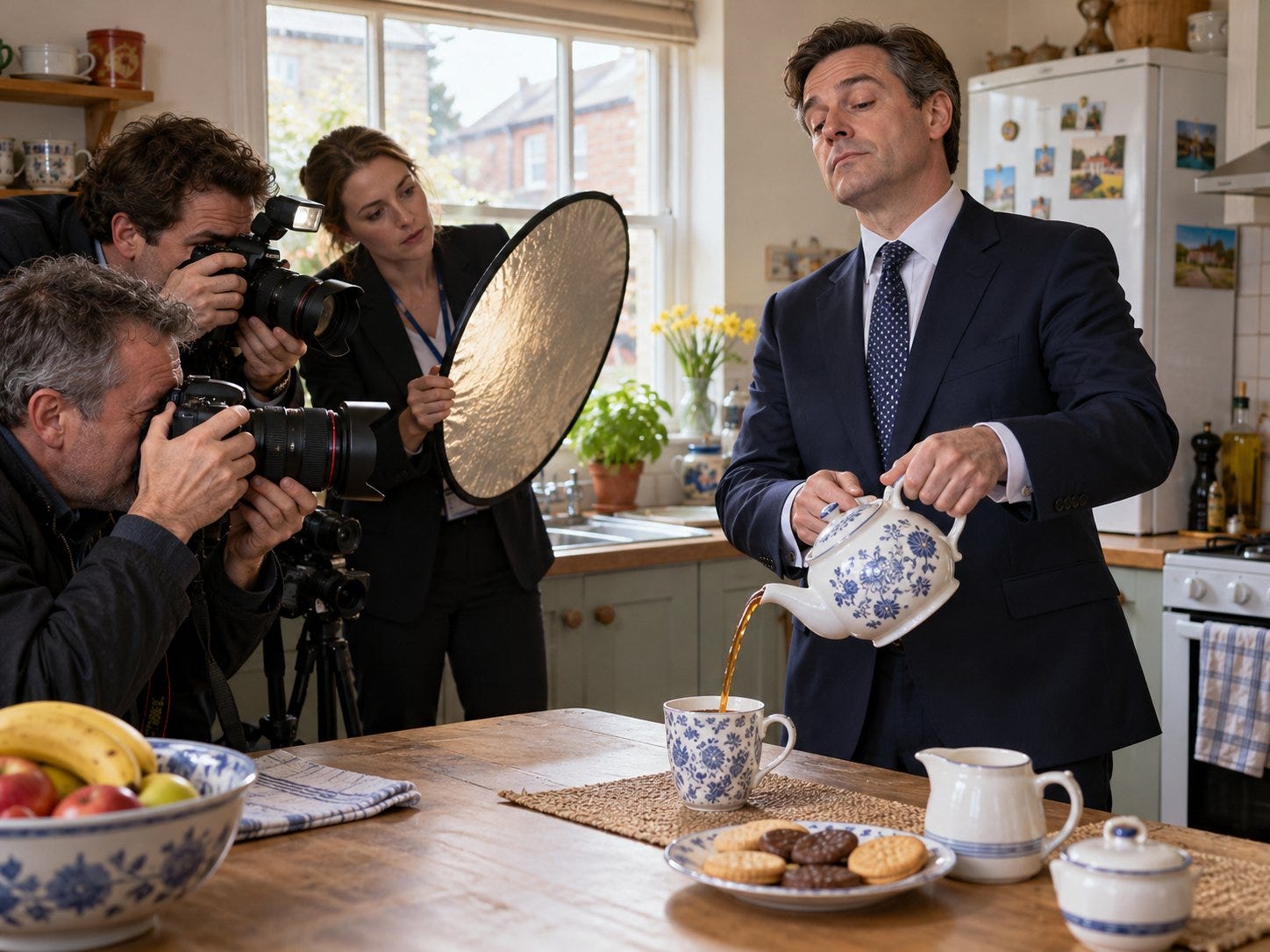
Informal political content can make public figures more approachable, but familiarity can grow faster than understanding. A politician who makes a convincing cup of tea has demonstrated precisely one thing: they can make tea. We occasionally ask it to carry a considerable amount of additional constitutional weight.
Being personable tells us little about how someone assesses evidence, manages competing priorities or responds when a decision goes badly wrong. Equally, awkwardness on camera is not a complete policy platform. You can like someone and still expect them to explain their numbers.
The audience has joined the production team
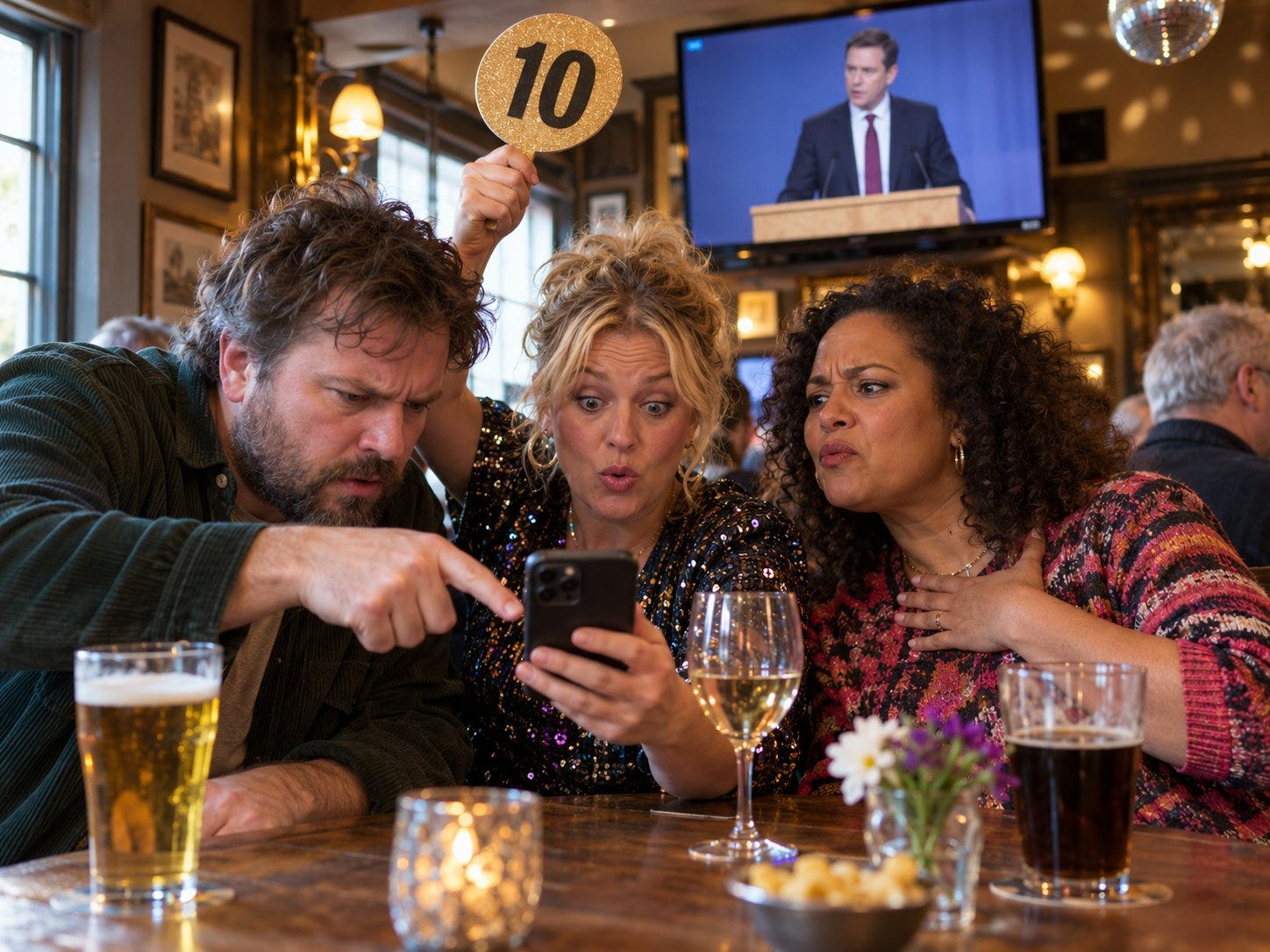
Fans now select moments, produce edits, explain technical details and defend favourites with considerable commitment. Political supporters, critics, journalists and campaign teams compete to explain what we have just watched in a similar ongoing contest over interpretation. This can improve the broader conversation when someone supplies missing context or corrects a claim. It can also turn scrutiny into an exercise in protecting the team at all costs.
Once we have publicly declared a favourite, acknowledging a poor performance becomes socially inconvenient. Friends have been informed. Posts exist. There is almost certainly a group chat. On Strictly, this produces spirited argument about whether the judges understand dancing. In politics, it can make holding anyone to account remarkably difficult.
Someone, of course, still chooses the headline, cuts the clip and decides whether we need the sentence immediately before it. These are small editorial decisions with considerable influence over whether we see a difficult question handled with composure or a person apparently in need of urgent supervision. The fuller account may be available somewhere. But by then we have watched the clip, formed a view and forwarded it to someone with the message “Exactly.”
We can still have favourites, enjoy the backstage humour and consider the scoring an outrage. We should probably check the performance before voting, though. Strictly at least provides a weekly elimination and someone holding a numbered paddle to explain precisely where it went wrong. Democracy makes us wait considerably longer, then sends the unsuccessful contestant to the House of Lords. Even Craig might consider that generous.
This article began with its author’s original idea and was developed, edited, illustrated, published, distributed and promoted with the assistance of LettsNews, with every editorial decision remaining in the hands of its author. It is the LettsNews connected workflow, put into practice.