


Announce designs on Greenland; insult the allies who’d be needed to secure it; invite them to join a vaguely titled “Board of Peace” and watch them decline; preside over a safe-haven stampede into gold as the dollar buckles; let federal agents kill citizens on U.S. streets; and then ask the Supreme Court to reassure the world that the rule of law still means something. That’s not a syllabus; it’s January.
Start with Greenland. The idea wasn’t born yesterday, Washington’s interest has been on-and-off since 1946 and famously flared under Trump in 2019 but in 2026 it returned at scale, from “considering a purchase” to talk of frameworks and pressure tactics that spooked even parts of Europe’s far right. The Greenlandic and Danish answer remains a flat, constitutional “no,” while policy hands note that any future for the island runs through NATO, shared stewardship, and the consent of Greenland’s people. Its not a real-estate transaction. The UK Parliament’s researchers say as much; so do Atlantic Council and Chatham House voices who warn that U.S. unilateralism over the Arctic risks blowing holes in the alliance it claims to protect.
Allies aren’t deaf to strategy the Thule/Pituffik Space Base matters; sea lanes matter; rare earths matter. But the means are as important as the ends. NATO’s new secretary general, Mark Rutte, all but said the quiet part out loud this month: Greenland’s security future is a NATO question, full stop. That is diplomatic code for “slow down, bring allies, follow the rules you wrote.”
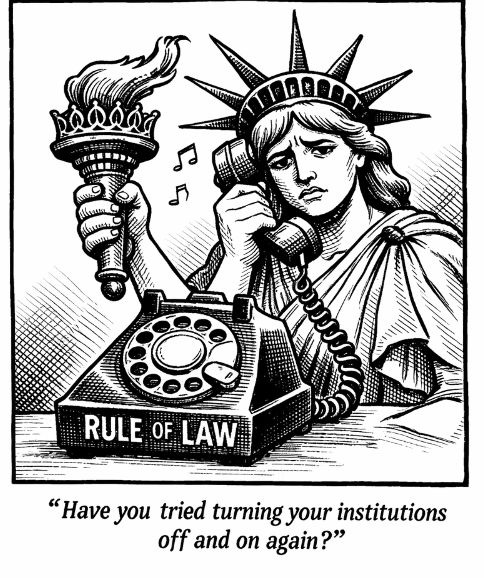
Enter Davos, where Canada’s prime minister Mark Carney delivered a brisk sermon on the end of the old rules-based order and the need for middle powers to band together. Read straight, it was a hedge against both Washington and Beijing; read sideways, it was a reminder to the U.S.: if you torch the guardrails, don’t be surprised when your neighbors drive themselves. The subtext landed because the week’s headlines made it literal.
Consider the “Board of Peace.” Whatever its stated aims, Europe read it as a White House attempt to re-centralize power under American chairmanship after months of transatlantic friction. Core EU states promptly declined or demurred. A diplomatic brush-off on a committee isn’t fatal; a pattern of them is. This one signals that Washington can no longer assume automatic yeses, even on things branded “peace.”
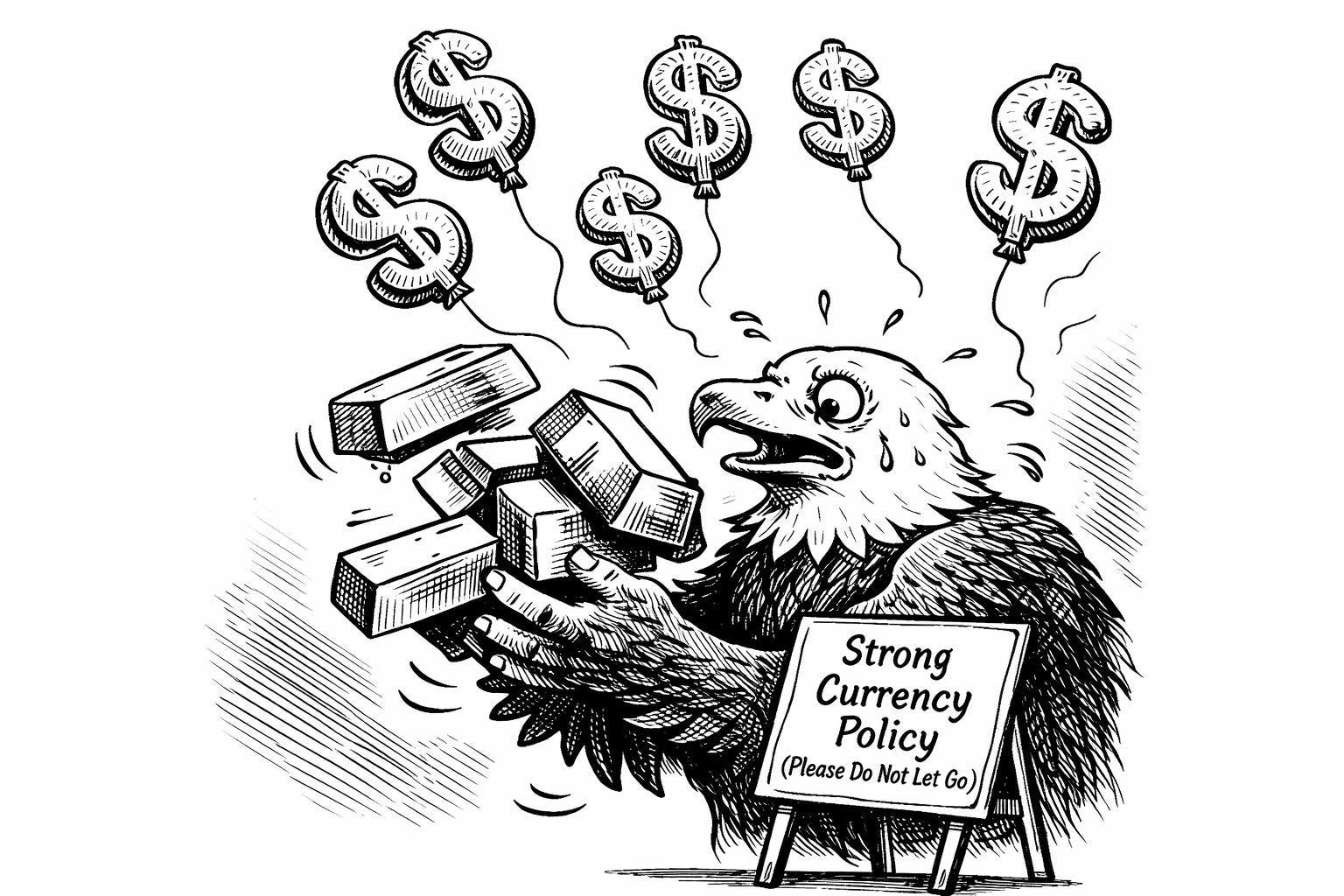
Markets drew their own conclusions. Investors voted with their feet, their ETFs, and their bullion dealers. Gold blew through $5,100, then $5,200, then higher, not because the metal suddenly acquired earnings but because the dollar’s credibility took a holiday. When presidents muse publicly about preferring a weaker currency and governance looks improvisational, safe-haven buying tends to become a plebiscite. If you want the telegraphic version: record gold, softer dollar, jumpy Swiss franc. That’s not a narrative crafted by the “fake news”; it’s a screen grabbed by anyone with a brokerage app.
Meanwhile at home, the state’s monopoly on force came under the worst kind of spotlight. Two Minneapolis killings by immigration officers, Alex Pretti and Renee Nicole Good, ignited protests, congressional demands, and a rare chorus of former presidents condemning the federal government’s conduct. Preliminary DHS materials admit two CBP officials fired on Pretti; outside reporting has already found contradictions in several government accounts of recent violent encounters. Allies read those stories, too, and they don’t parse the footnotes. They see a superpower claiming Greenland by day while shooting its own citizens by night. Credibility is an ecosystem; when it’s poisoned locally, it dies globally.
This is where Europe’s “stance” stops being a communiqué and becomes habit. NATO will keep talking interoperability and shared burdens, but governments are already practicing strategic autonomy: joint procurement that doesn’t run through the Pentagon, energy strategies that assume U.S. volatility rather than U.S. anchorage, and Arctic planning that treats American ambitions as a variable, not a constant. Washington used to worry that Europe was feckless. It should worry that Europe is learning to be independent.
Back to the title, SuperPower Suicide. It’s a strong phrase, but the steps are mundane. You don’t need a catastrophic war; you just need a long run of unserious choices. You can’t arrest your way to sovereignty in Minneapolis and sermonize about sovereignty in Nuuk. You can’t bully allies into committees and expect them to escort you to the cashier’s desk in Greenland. You can’t tell the world the dollar’s just another instrument and then feign shock when people pick up a different one. Great powers don’t die of mystery illnesses; they die of comorbidities treated with denial.
Is there an off-ramp? Possibly several. First, tether Greenland policy to law and alliance - publicly, specifically, boringly. “Shared responsibility” is more than a think-tank headline; it’s the only route that won’t blow up NATO while empowering Beijing and Moscow in Arctic councils. Second, stop performing currency policy on social media; let the Treasury and the Fed do the talking, and make it clear that the dollar is a trust, not a toy. Third, bring the justice system into daylight. The Minneapolis cases can still become proof that America’s vaunted self-correction works - if independent investigations proceed, prosecutions (if warranted) happen, and accountability is plain. The world doesn’t require perfection; it requires visible due process.
Which leaves the final question: will the Supreme Court let the world see that the rule of law still binds presidents, agents, and agencies or will it shrug and thereby certify the suicide note? Courts don’t move markets hour-to-hour; they do set the long price on sovereign risk. A judiciary that insists on legality in surveillance, immunity, and use-of-force cases puts oxygen back in the room. One that defers reflexively tells investors to keep buying Swiss francs and bullion.
Superpowers recover by rediscovering the boring things: alliances treated as contracts, not casting calls; central bank independence treated as sacred, not negotiable; domestic law enforced against the powerful, not just the powerless. Do those, and the gold line on the chart cools, the dollar stops wobbling, and Europe remembers why following the U.S. is usually the safest bet in a dangerous world. Fail, and the Greenland gambit will enter the textbooks as a footnote in a chapter titled exactly what you fear it will be titled.
History’s judgment is not waiting in a cave; it’s refreshing a browser. Today it sees an America flirting with self-harm and a handful of ways to stop. Choose one soon.