


Donald Trump has built a crisis the way Swedes build wardrobes: himself, from a kit, with bits left over.
Americans have discovered a thrilling new extreme sport: filling up the car. The national average for regular gasoline climbed to $4.48 a gallon on 21 September, edging towards this year’s record high of $4.56 reached on 21 May. In California, regular now costs $6.114 per gallon, at which point it becomes financially sensible to commute by horse, a vehicle that runs on hay and resentment, both of which Americans have in abundance.
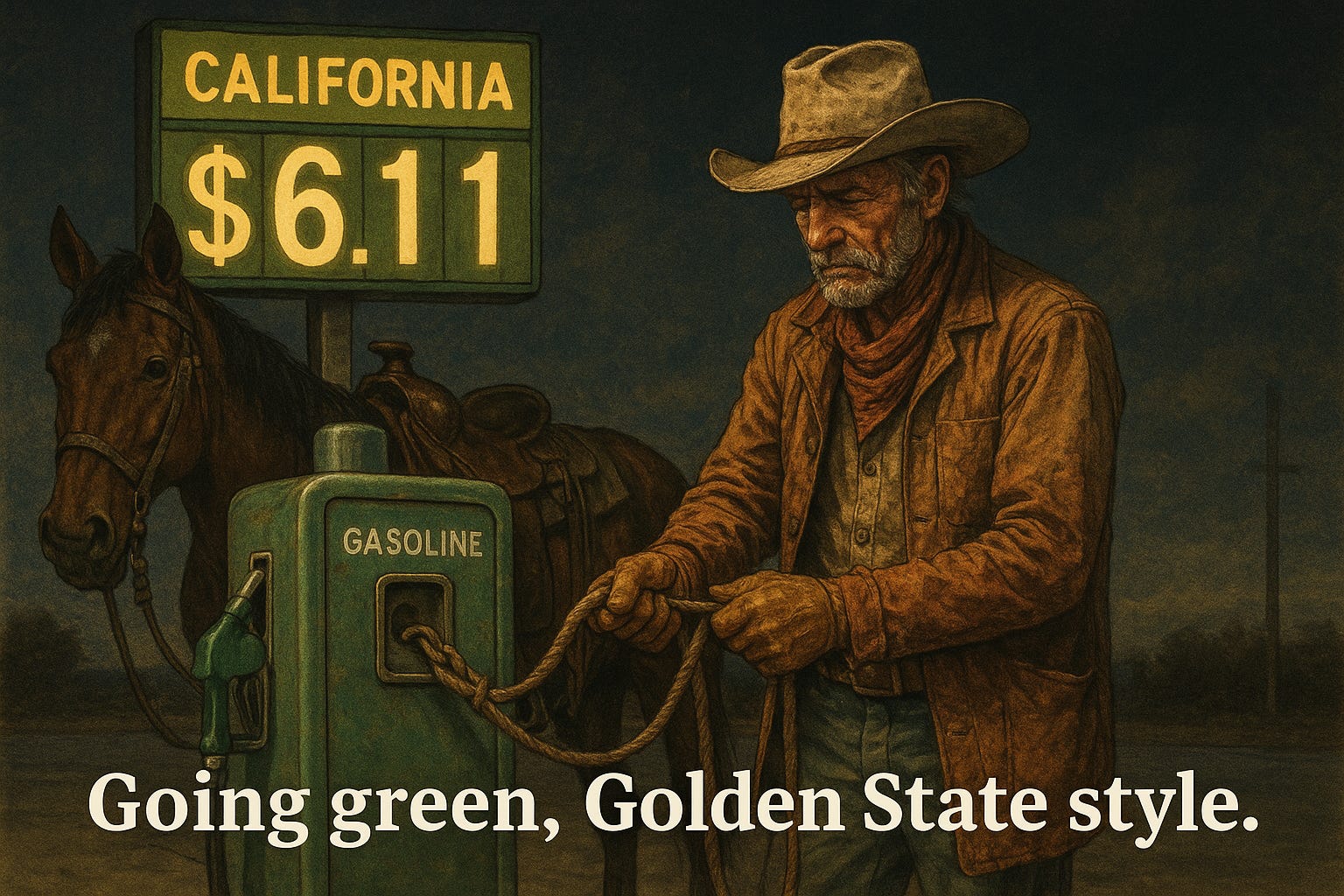
How did the world’s largest oil producer end up rationing its road trips? Through ambition. Since late February, the closure of the Strait of Hormuz during the 2026 Iran war has disrupted roughly 20 per cent of the world’s oil supply. Washington then answered the blockade with a blockade of its own, a bit like fixing a leaky pipe by drilling a second hole in it.
The rest of the planet has been invited to the party whether it RSVP’d or not. Brent surged to around $118 in late March, and by early September was back up to $109 as renewed attacks on shipping and energy infrastructure reversed earlier gains. In the Philippines, diesel passed the equivalent of $10.75 a gallon. The only people having a worse time are the Iranians, whose rial hit an all-time low of 2,020,000 to the dollar on 24 August. That makes a cup of tea a seven-figure transaction.
Then there are the tariffs, the economic equivalent of trying to put out a chip-pan fire with a jerrycan. Back in March, the American Enterprise Institute, a think tank not known as a hotbed of Trotskyites, warned the war raised the risk of recession and rising inflation, and urged a rethink of tariff policy and an end to Trump’s relentless attacks on the Federal Reserve’s independence. The White House took this advice in the spirit in which it was offered: by ignoring it entirely.
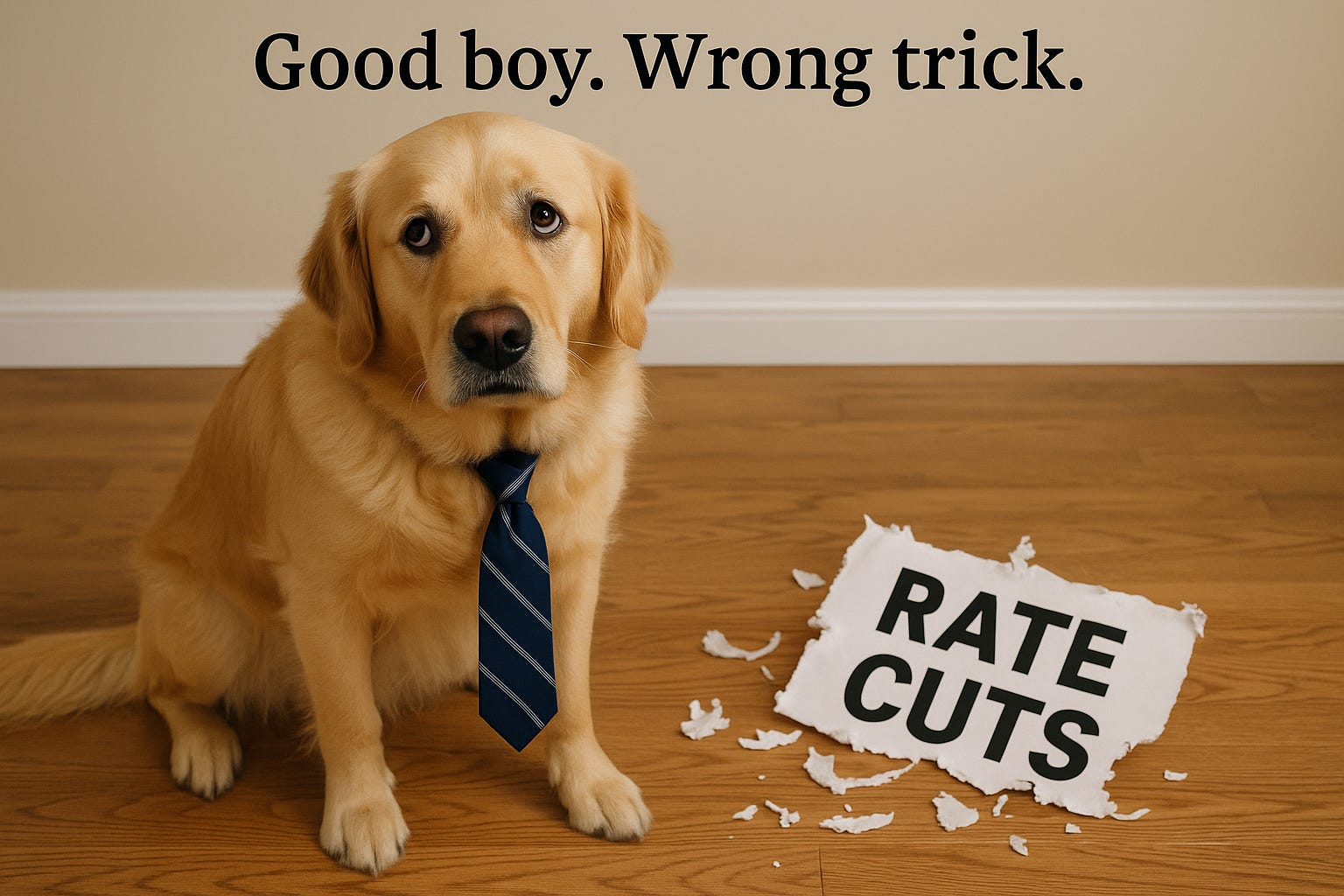
That brings us to the finest comedy of the lot. Trump installed Kevin Warsh at the Fed, presumably expecting a loyal golden retriever. Instead, on 16 September the committee voted unanimously, 12–0, to raise rates to 3.75–4.00 per cent, the first increase since 2023, despite public presidential opposition. Picking your own referee, only to have him brandish a red card at you, takes a very special talent.
Voters, meanwhile, have noticed. In one mid-September poll, Trump’s approval on inflation stood at 24 per cent, matching his low with the pollster. A Data for Progress survey found 61 per cent blame Republicans more for rising gas prices, against 31 per cent for Democrats. The President has repeatedly asked voters to “pretend I’m on the ballot”, and they appear to be pretending with tremendous enthusiasm.
The clock is ticking louder than a taxi meter in Mayfair. Absentee ballots are already coming back in North Carolina’s pivotal Senate race, and surveys from Democratic campaigns show races within the margin of error in seats Trump easily won two years ago. Those are partisan polls and should be taken with a pinch of salt, which, mercifully, is still affordable.
Is this historically unique? Nixon and Carter endured oil shocks too, but theirs were delivered by OPEC and ayatollahs, like unwanted parcels. Trump’s distinction is authorship. He launched the war, wrote the tariffs and chose the central banker now tightening the screws. Most presidents inherit their crises. This one ordered his from a catalogue and assembled it himself.
In fairness, his defenders have a case. Iran shut the Strait, not Washington. The Fed itself says economic activity is expanding at a solid pace, and core inflation eased to 2.4 per cent in August, the lowest since March 2021. The IMF even revised world growth to 3 per cent for 2026, arguing AI-driven demand has cushioned the oil shock. So this is less a collapse than a very expensive wobble. Rescue is conceivably in sight, too: Iran has reportedly proposed reopening Hormuz within seven days if the US lifts its blockade, just as Trump prepares to address the UN General Assembly. The author of The Art of the Deal has six weeks to make one. Otherwise, come November, the only thing running on empty will be his majority.
The Letts Journal is a reader-supported publication. To receive new posts and support our work, consider becoming a free or paid subscriber.
Keep up to date with The Letts Journal’s latest news stories and posts at our website and on twitter.