


America’s billionaires are financing a populist uprising against the elites. The Democrats are passing round the collection plate. Everyone claims to be saving democracy, which has never been so expensive to rescue.
American democracy is having another expensive nervous breakdown. More than $15 billion has reportedly been raised across the 2026 election cycle, much of it destined for television advertisements explaining that the other half of the country is either communist, fascist or secretly planning to confiscate the family barbecue.
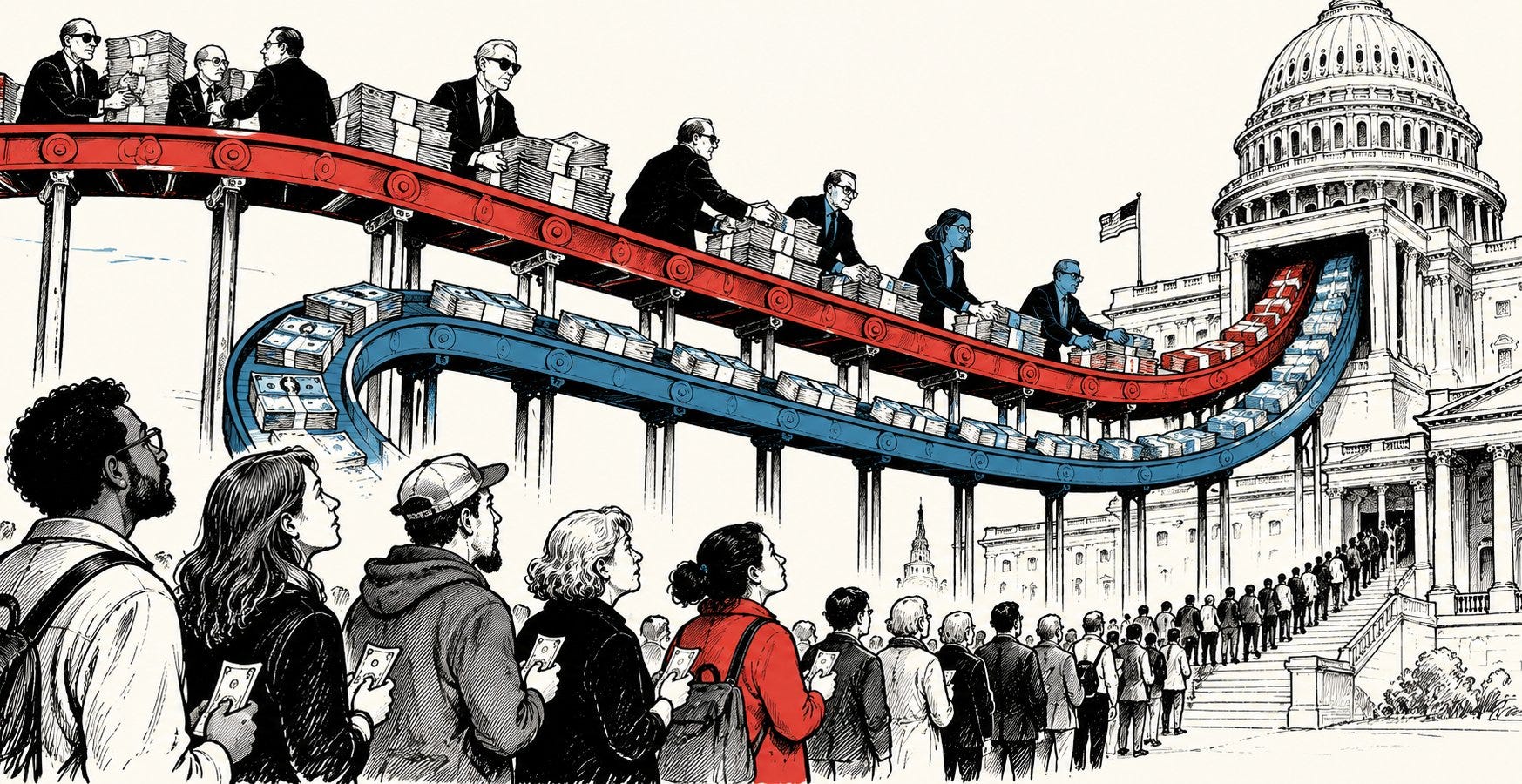
Both parties claim to be fighting for ordinary Americans, although ordinary Americans appear to have been priced out of the fighting. Beneath the familiar spectacle of politicians denouncing wealthy elites between fundraising dinners with wealthy elites, something interesting is happening. The Democrats and Republicans have developed rather different ways of paying for democracy.
Democratic congressional candidates have been remarkably successful at raising money directly, often in small contributions. Republicans have attracted a disproportionate share of America’s largest political donations, much of it flowing through super PACs. The Republicans have the billionaire subscription service. The Democrats have perfected the recurring $25 payment, with an automatic renewal every time civilisation faces imminent collapse.
The question isn’t simply which side has more money. It’s whether the way politicians raise it changes whom they listen to once elected.
The founding fathers forgot the fundraising dinner
The American constitutional experiment was built around a charmingly innocent proposition: citizens would elect representatives who would answer to them, rather than to a monarch, an aristocracy or whichever duke owned the surrounding countryside. Admittedly, the original definition of citizen was rather selective, but representative accountability was the general idea.
The founders anticipated factions, ambition and corruption. They did not anticipate a political system in which a billionaire living three thousand miles away could spend more electing a congressman than the congressman’s entire constituency.
Consider two candidates. One raises money from thousands of local voters, each contributing what they can. The other depends heavily on a national super PAC financed by someone who owns three aircraft and regards corporate taxation as a personal insult.
Both need votes. But the first has an incentive to cultivate relationships with the people they hope to represent. The second has an additional constituency whose interests may require a private terminal.
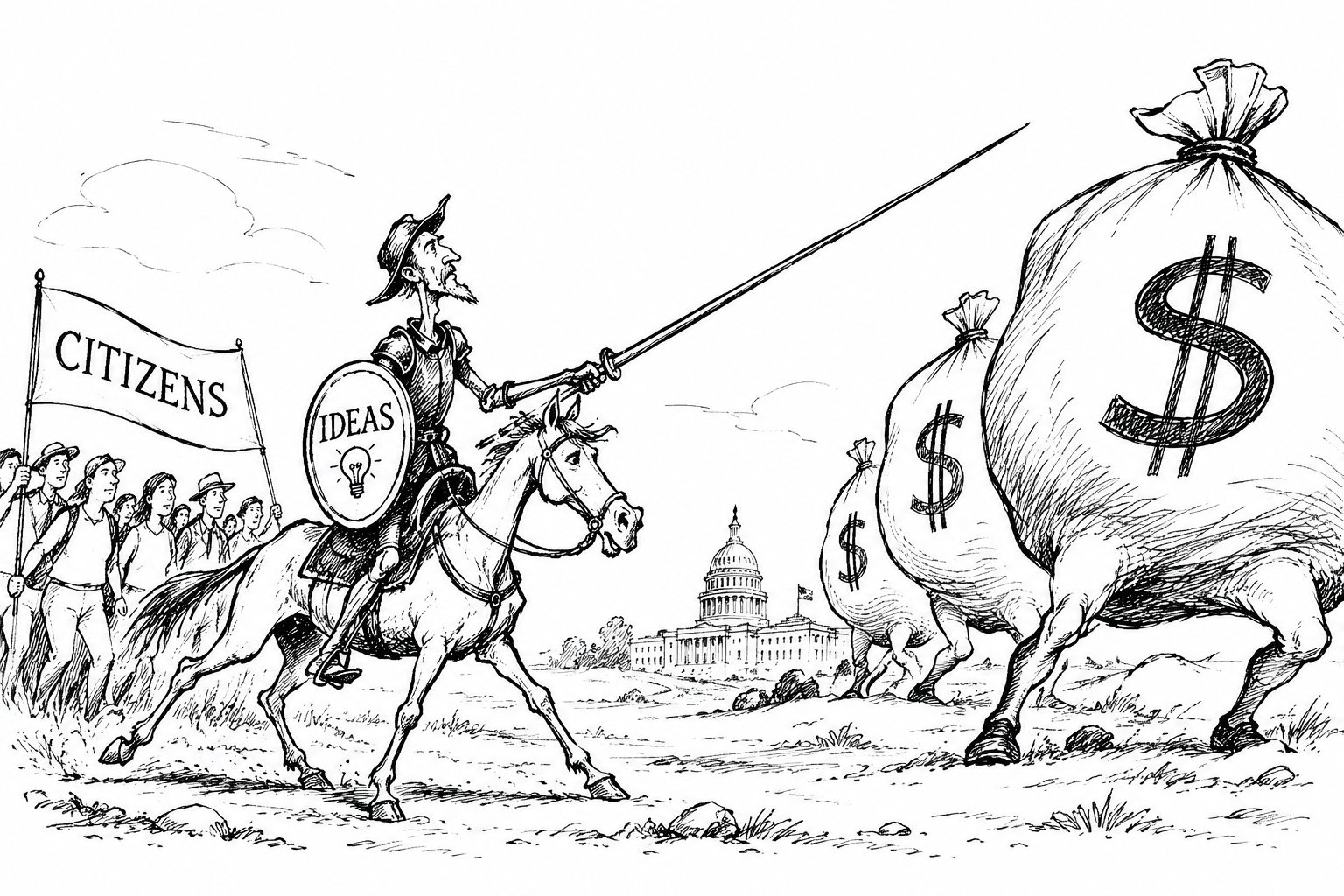
Of course, the distinction is imperfect. Small donors are not necessarily local, and a $25 contribution confers no greater right to representation than giving nothing. Nevertheless, a politician supported by a broad constituency has a different financial relationship from one whose electoral survival depends on a few spectacularly wealthy strangers.
The Constitution gave citizens the vote. It neglected to provide everyone with a seat at the fundraising dinner.
The peasants’ revolt, sponsored by billionaires
October reporting shows America’s largest political donors directing vastly more money towards Republican-aligned causes than Democratic ones. Elon Musk alone has reportedly contributed hundreds of millions during the cycle.
This is a remarkable collection of benefactors for a movement dedicated to liberating ordinary Americans from powerful elites. It is rather like discovering that the French Revolution was underwritten by the Palace of Versailles, with complimentary champagne for major donors.
Republicans certainly have grassroots supporters, and Donald Trump has demonstrated an exceptional ability to persuade them to donate. But enthusiasm for Trump doesn’t necessarily extend to an unfamiliar Senate candidate whose principal achievement is having been photographed standing near him.
Fortunately, the billionaires can help. Persuading a million people to contribute $50 requires considerable effort. Persuading five billionaires to contribute $10 million each requires five telephone calls and perhaps lunch somewhere that doesn’t print prices on the menu.
Super PACs can spend unlimited sums independently supporting or opposing candidates. The legal distinction is important. The billionaire doesn’t give the candidate the money. He simply finances millions of dollars of advertising explaining why the candidate’s opponent is a danger to civilisation. Entirely separate activities, rather like a restaurant insisting it has no relationship with the chef.
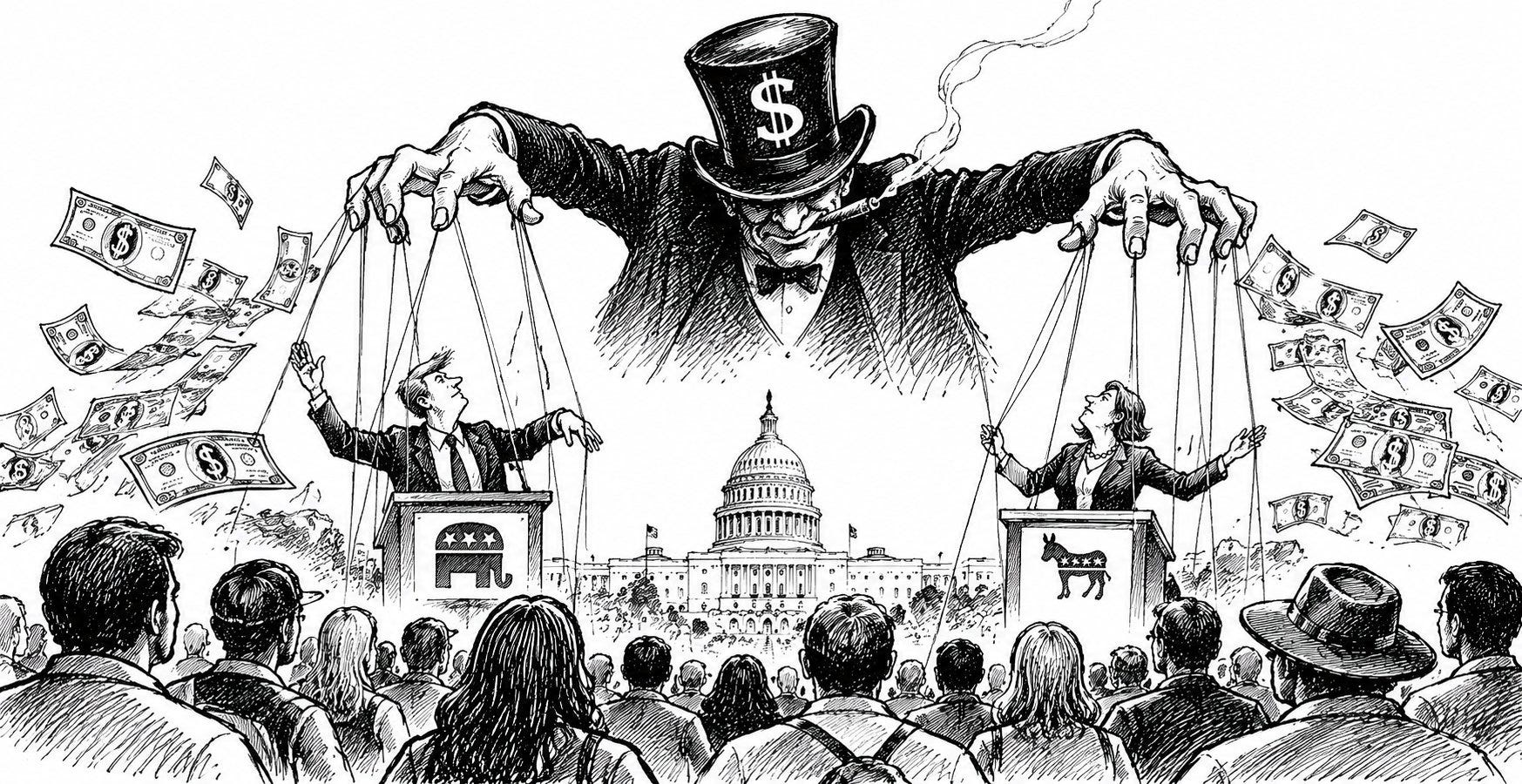
This need not involve corruption. The problem is more elegant than that. A donor contributing $25 receives an automated thank-you email and six requests for another $25. Someone contributing $25 million is unlikely to spend much time on hold.
What does the ordinary American get?
The real test of this arrangement is what happens when the interests of wealthy donors and ordinary voters diverge.
Lower business taxes can encourage investment. Less regulation may help smaller businesses. Tariffs can appeal to workers worried about industrial decline, even when economists and importers are reaching simultaneously for the aspirin.
But wealthy investors have obvious reasons to favour lower taxes on high incomes, capital and estates. Lower-income voters are more immediately concerned with wages, housing, groceries and healthcare. The Congressional Budget Office’s analysis of the Republicans’ major 2025 tax and spending legislation found that households towards the bottom of the income distribution would generally lose resources over subsequent years, while those in the middle and at the top would gain.
For a billionaire, Medicaid cuts may represent admirable fiscal discipline. For someone whose mother depends on the programme, fiscal discipline may involve explaining why the invisible hand of the market is no longer paying for her medication.
Technology investors have equally strong opinions about cryptocurrency, artificial intelligence and regulation. They argue that government interference stifles innovation, an argument that becomes particularly persuasive when the innovation belongs to them. The warehouse worker whose job is being automated may have a less enthusiastic interpretation of progress.
Democrats have their own uncomfortable relationships. Wall Street donors favour financial policies that don’t necessarily match the priorities of progressive voters. Wealthy technology supporters may enthusiastically fund politicians promising to protect workers from corporate power, provided the protection doesn’t become too enthusiastic. Environmental donors and union members can find themselves on opposite sides of an energy project, each convinced the party ought to remember who its friends are.
Neither party is a single political interest. Both are collections of competing constituencies, some considerably better funded than others. The question is whose concerns receive the most attention when they collide.
The billionaire and the warehouse worker may vote for the same candidate. They are unlikely to have identical expectations of what happens afterwards.
The Democrats’ $25 emergency
Before Democrats begin awarding themselves medals for democratic virtue, they should examine their own fundraising machinery.
Michael Bloomberg and George Soros are not financing elections with the proceeds of a church raffle. Democratic super PACs receive enormous contributions, and Democratic politicians have wealthy patrons whose policy preferences are unlikely to be expressed solely through handwritten letters to their congressman.
But Democrats have also industrialised small-donor fundraising with an efficiency that would impress a subscription software company. Every election is the most important in history. Every deadline is final. Every email arrives with the solemn urgency of a hostage negotiation, although the hostage is usually a campaign finance target.
The achievement is real. Raising millions through small contributions can bring more people into political activity, create direct relationships with candidates and reduce dependence on a few enormous benefactors. It can also turn democratic participation into a recurring billing arrangement in which the customer receives anxiety instead of a streaming service.
And those small donors aren’t necessarily representative of the wider electorate. The people most willing to give money online are often the most politically committed. A candidate can become highly responsive to a national audience of furious subscribers while remaining surprisingly unfamiliar with the quieter voters back home.
The Democrats have developed a formidable method of collecting small sums from large numbers of people. The Republicans have formidable access to large sums from small numbers of people. Both methods are efficient. Neither guarantees that the resulting politician will remember the constituent who couldn’t afford to donate.
One person, one vote, several billion dollars
America has perfected a curious form of political equality. Every citizen gets one vote, while a fortunate minority can spend enough money to influence what millions of other citizens think before casting theirs.
The Republicans have made the contradiction particularly visible by combining populist rhetoric with extraordinary billionaire support. The Democrats have demonstrated that a vast number of relatively small donations can also finance an enormous political machine. One model concentrates financial influence. The other distributes fundraising across more contributors, although it can still concentrate political attention on the people most willing to pay.
Perhaps the billionaires sincerely believe they are acting in the public interest. Perhaps the small donors do too. The trouble begins when their interests diverge from those of the millions of Americans who elect representatives but never contribute a penny.
The Constitution says politicians represent the people. The campaign finance system has added a rather elaborate footnote.
The billionaires buy the politicians. The small donors rent their attention by monthly instalment. And ordinary Americans get to choose which ones they’ve bought.