


The state has quietly started backing AI startups with public money.
Nobody voted for this. Nobody is entirely sure who is in charge. And the exit strategy is, to put it gently, unclear.
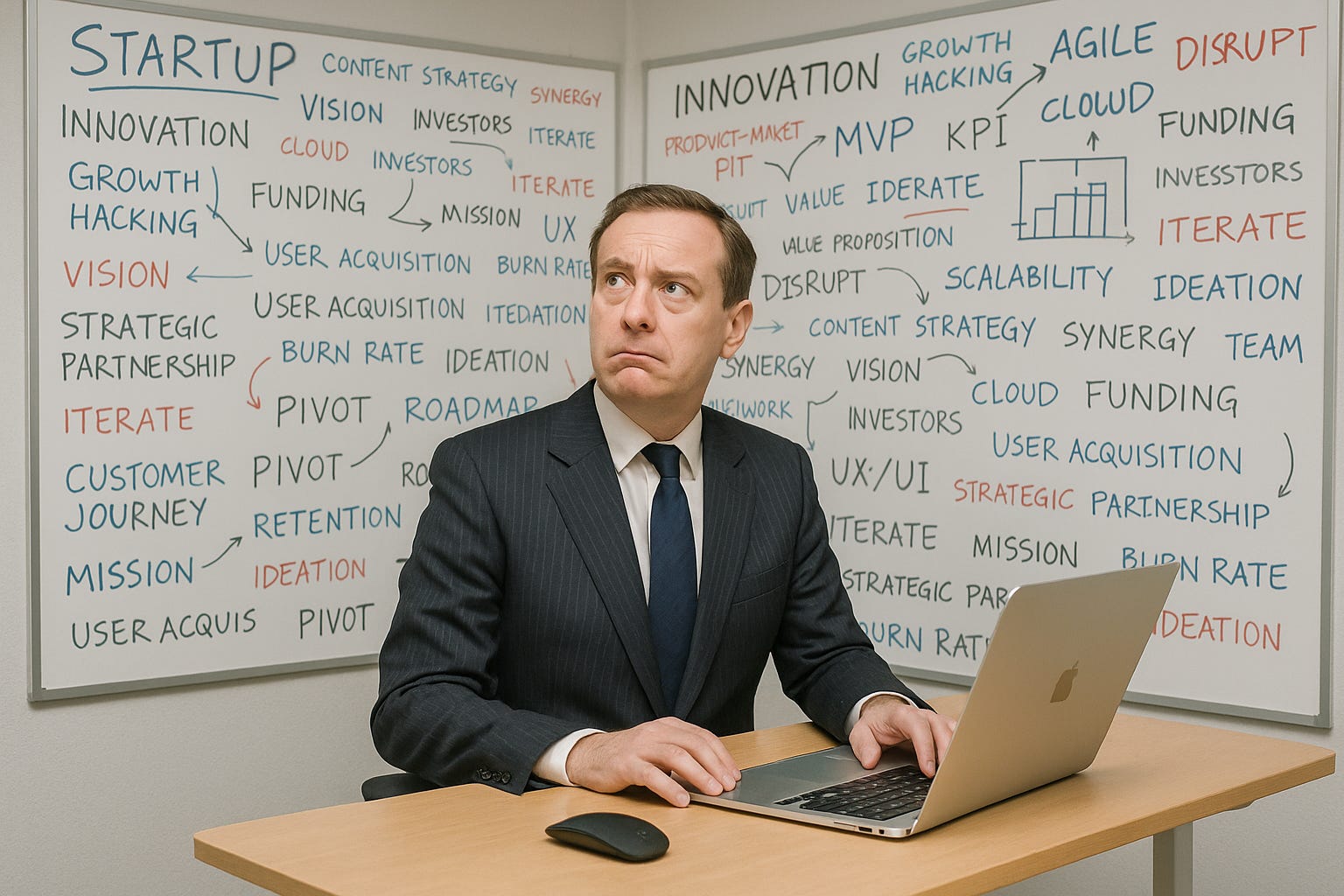
Last week, quietly, without fanfare, without a manifesto commitment, and almost certainly without your knowledge or consent, the British state became a venture capitalist again.
The UK’s Sovereign AI Fund — which, depending on your level of cynicism, is either a bold industrial strategy or a very expensive way of making civil servants feel relevant — co-invested alongside the British Business Bank into Ineffable Intelligence.
That is the new outfit from David Silver, the ex-DeepMind reinforcement-learning chief who is, by any reasonable measure, one of the most formidable minds in artificial intelligence. The company name alone suggests a certain confidence.
Ineffable.
Beyond words. Beyond description. Possibly beyond accountability. This was, officials were at pains to note, the fund’s second direct investment in a couple of months. Which means we are no longer talking about a one-off punt. We are talking about a portfolio strategy.
The government has a portfolio strategy?? The same government that cannot reliably deliver a passport in under ten weeks?
Let us pause here to appreciate the journey. Not long ago, the British state’s relationship with technology investment was essentially: write a cheque to a quango, wait fifteen years, read a damning NAO report, apologise in the Commons, then repeat.
The idea that Whitehall might one day be doing what Andreessen Horowitz does — identifying founders, co-investing at early stage, taking stakes in companies that may or may not exist in five years — would have seemed, until recently, like satire. It is still satire. It has simply also become policy.
The Sovereign AI Fund is, in theory, exactly what the name suggests: a mechanism by which the British people, collectively, take a sovereign stake in the artificial intelligence companies most likely to define the next century of economic life.
Rather than watch American and Chinese capital hoover up every interesting AI company while Britain produces white papers and consultation documents, the fund writes cheques. Direct cheques. Into actual companies. Run by actual founders. Who might actually succeed, or might actually fail, in the way that startups actually do.
This is, genuinely, not a stupid idea. It is, in fact, a rather grown-up idea. The question is not whether the idea is good. The question is whether the British state is the right entity to execute it. Or, whether they use our mothership’s AI VentureFactory to make sure the strategy can work!
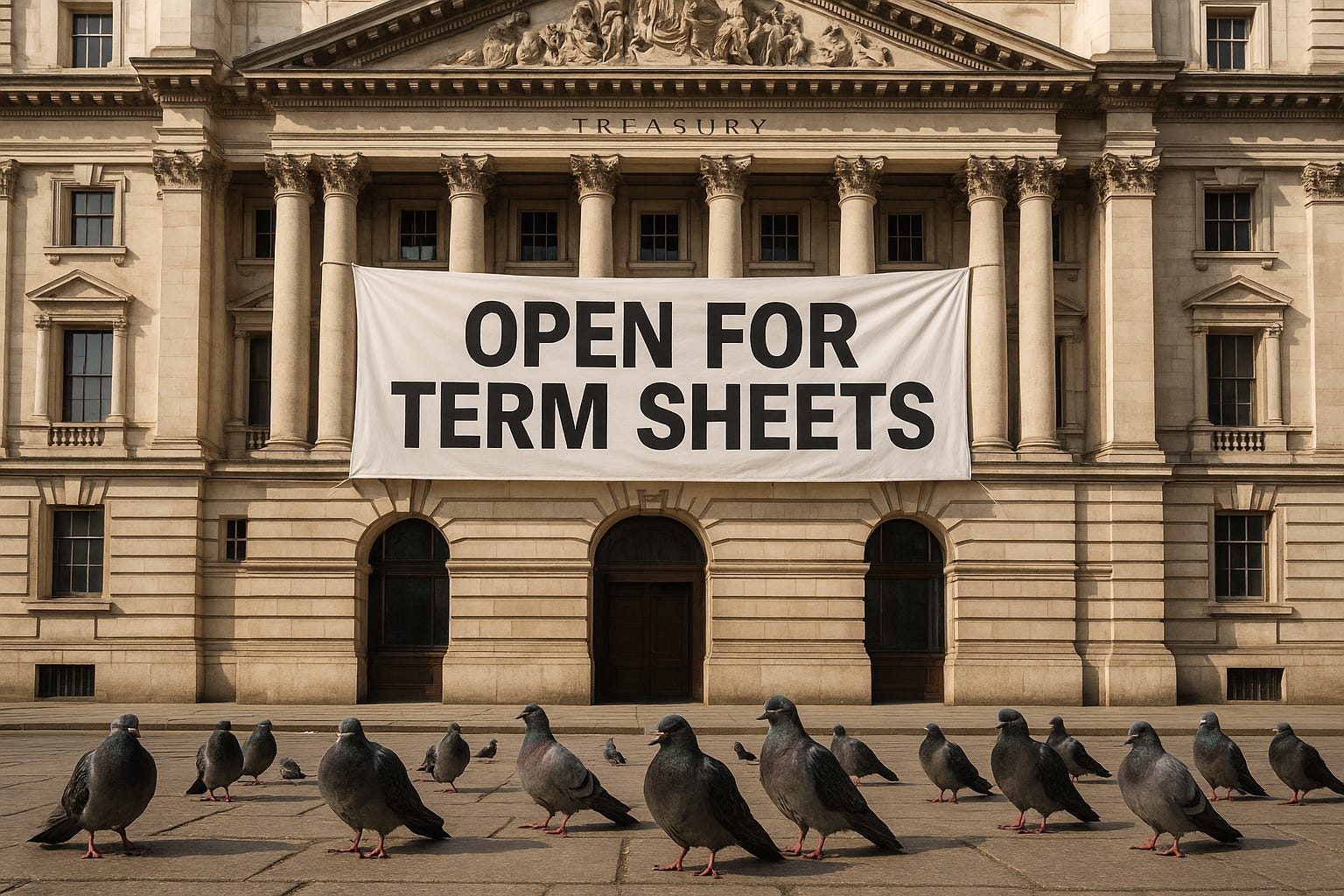
Because here is the thing about venture capital. Most of it fails. That is not a criticism. That is the model. At best, you back ten companies knowing that seven will struggle, two will survive, and one — if you are very lucky, very smart, or both — will return the fund.
The entire asset class is built on the statistical certainty of repeated, expensive, public failure.
Sand Hill Road has made peace with this. It has built an entire aesthetic around it. The failure is the point. The failure is what makes the successes possible. The British state has not historically made peace with failure. The British state treats failure as a resigning matter, a select committee matter, a Daily Mail front page matter.
When a private VC backs a company that subsequently fires a thousand people and sells its IP to a Californian hyperscaler for pennies on the pound, the partners have an awkward quarter and move on. When a sovereign fund backs that same company, there is a question in the House. And that question — “Minister, can you explain why public money was used to fund a company that has just been acquired by Microsoft?” — is coming. It is not a matter of if. It is a matter of which portfolio company, and when.
Regular readers will recall that we have been here before, in a manner of speaking. A few months ago, The Letts Journal noted the peculiar democratisation of venture capital — the moment when the asset class stopped being the exclusive province of Mayfair partnerships and Sand Hill partnerships and became, theoretically, available to anyone with a brokerage account and a tolerance for illiquidity. We called it “VC at £119 a month.”
The state, it now turns out, has been doing something structurally similar, just with your tax money rather than your disposable income, and without asking. The parallel is instructive. In both cases, the pitch is the same: the returns are where the future is being built, and you deserve access to those returns. In both cases, the risk is the same: the future is genuinely being built there, but most of the buildings will collapse before completion, and you will not get your money back.
The difference is that the £119-a-month retail investor made an active choice. The British taxpayer, as a limited partner in the Sovereign AI Fund, did not fill in a form.

None of this is to say the Ineffable Intelligence investment is wrong. David Silver is, by any measure, an extraordinary bet. Reinforcement learning is not a niche. The company’s name may be hubristic, but the founder’s track record is not. If you are going to write a cheque into the AI ecosystem, you could do considerably worse. But a fund is not a single cheque.
A fund is a commitment to keep writing cheques, through cycles, through disappointments, through the inevitable moment when one of your portfolio companies becomes a story rather than a success.
The Sovereign AI Fund is two investments old. The hard questions have not yet arrived. They will be ineffable when they do.
Keep up to date with The Letts Journal’s latest news stories and posts at our website and on twitter.